North ⇄ South
With works by: Marthe A Andersen, Tasos Gkaintatzis, Úna Hamilton Helle, Miriam Hansen, Eva Ísleifs, Maria Nikiforaki, Viktor Pedersen, Sarah Sikorie, Elektra Stampoulou, Simon Daniel Tegnander Wenzel, produced by A – DASH and Living Room. Exhibition curation, concept, texts: Eleni Riga. Exhibition photos: Frank Holbein
“Winter Nights” brings together Norwegian, Greek and Icelandic artists in an exploration of seasonal rituals, animist worldviews and ecological memory. The international exhibition considers the meeting point between nordic and southern animisms, reflecting on climate change and ecological grief.
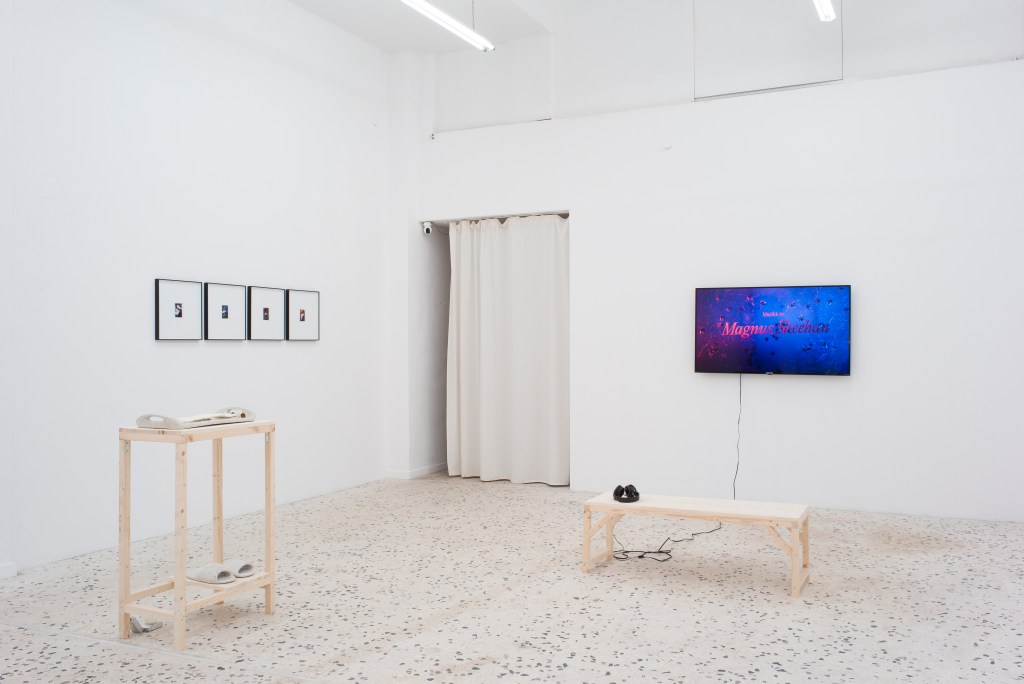
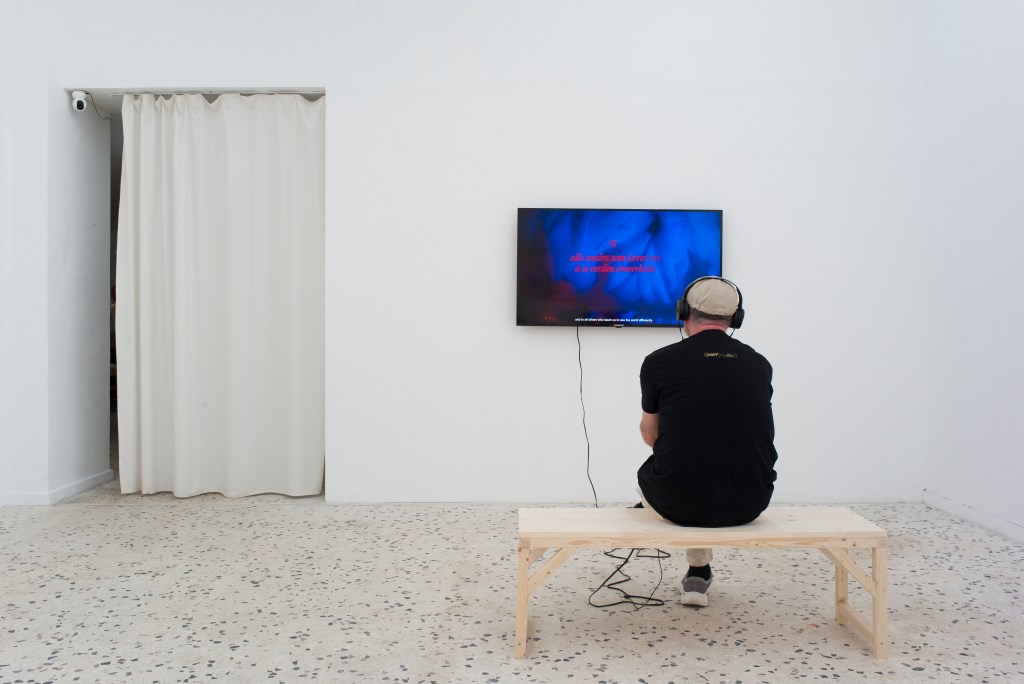
The exhibition was first presented at BO (The Association of Visual Artists Oslo) and at Femidomen in September–October 2025 with the support of Arts and Culture Norway and the Norwegian Embassy in Athens. It takes its title from Vetrnætr, the pre-Christian Nordic ritual marking the transition into winter. Traditionally held after the harvest, the gathering offered a final moment of communal exchange before the darkness and cold winter. It served both practical and spiritual purposes: strengthening social bonds and solidarity, while acknowledging relationships with the land, ancestors and other-than-human forces.
Reflecting on “nordic animism” and historian Rune Hjarnø Rasmussen’s writings, describing it as a means of recognizing animals, plants, rocks, waters and spirits as “persons”, the exhibition seeks to re-establish kinship with the more-than-human world. Looking to traditions bearing this approach can offer us tools for re-entering a responsible, attentive relationship with the world. The participating artists responded to this invitation through works that address seasonal change, power, history, magic, sleep, death and rebirth, drawing on embodied experience, daily practices, family and land ties, as well as political concerns.
In Oslo, it was central to shift the perspective away from that of a heliotropic society, one oriented toward light and the promise of perpetual growth, toward an understanding of winter and darkness as conditions to be embraced, inhabited and attuned to. Now, as the exhibition travels to my land, this perspective opens onto a convergence between northern and southern animisms. The exhibition expands beyond winter as a specific season to consider cyclical time, seasonal transformation and our relationship with the more-than-human world. It turns toward traditions, practices, and forms of knowledge shaped through humanity’s repeated encounters with ecological crises, asking what these accumulated ways of relating to nature might offer us in the present.
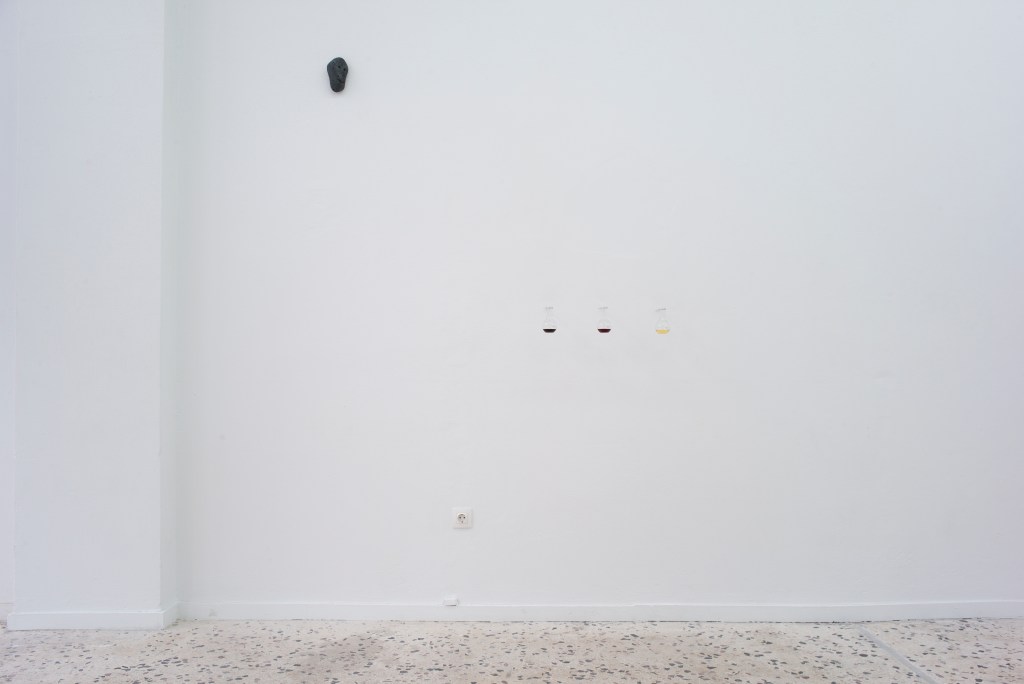
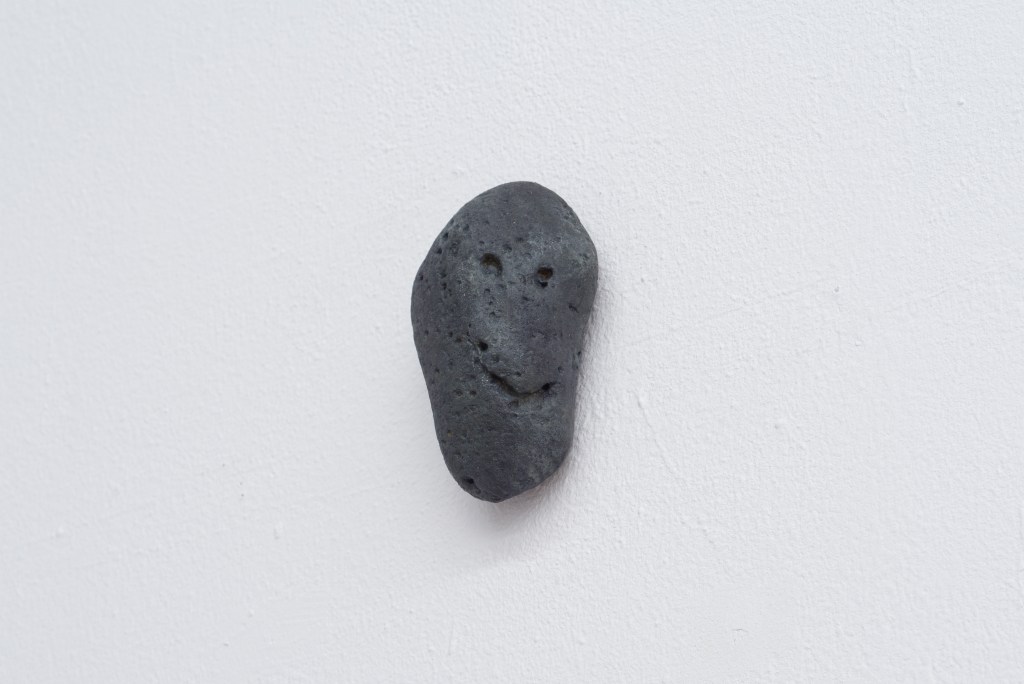
Eva Ísleifs’“I See Myself in You” begins with a found stone whose naturally formed features suggest a human face. Its smile appears at the entrance of the exhibition, almost like an apotropaic object: an object believed to ward off harm or unwanted forces through its protective presence, greeting the visitor while turning away whatever might threaten the space.
The work emerges from pareidolia, the tendency to recognize familiar forms, particularly faces, in otherwise ambiguous patterns. For Ísleifs, this becomes a way of orienting herself in the world. On walks along the coast of Iceland, she found two such stones and named them sisters. This simple act of naming turns an accidental encounter into a relationship, opening onto questions of kinship, sisterhood, motherhood, and even grandmotherhood, as well as the artist’s own shifting relationship to femininity and masculinity. The stones become relatives through a process that begins with seeing and develops through naming and attention.
The stones resonate with Nordic animist traditions in which natural formations, particularly stones, are understood as carrying an anima, a presence or vitality of their own. Pareidolia introduces another layer: the human impulse to recognize faces and relations in the forms of the natural world, a recurring process in the history of art and a reminder that ways of seeing are never neutral.
Having lived between Greece and Iceland, Ísleifs brings these different cultural landscapes into the same encounter. Placed at the threshold of the exhibition, the smiling stone becomes a point of connection between northern and southern animisms.
Simon Daniel Tegnander Wenzel presents “Memory’s Maze — On growing in circles” a three-scent olfactory installation that explores love, loss and memory, echoing the symbolic and magical resonance of the number three.
“Scent #1, Shine Kindly Here”, evokes love and harvest. Inspired by Dan Forrest’s choral piece «Goodnight, Dear Heart», it conjures the golden rays of a late-summer sunset on ripened fields. Notes of wilting straw and autumn fruit recall the artist’s grandparents’ garden, anchoring memory in sensory experience.
“Scent #2, Pyre”, turns to loss, fear and death. With the scent of tar and melted metal, evoking silver required for safe passage in the afterlife, it also carries hints of burning flesh and smoked meat, conjuring rituals of fire, transformation and mortality.
“Scent #3, Growing in Circles”, combines spruce resin collected from Oslo Old Town’s Cemetery with pine heartwood, compounds emitted through skin by the elderly and honey reminiscent of mead offerings to ancestors. It reflects familial ties to the forest and ancestral continuity. The artist notes: “By creating this work, I see myself partaking in, continuing the growth of rings inside a tree, my generational and spiritual family tree.”
For the opening, “Cera Anima” brings notes of wool, warm skin and animal hides into the space, a scent of something deeply intimate, blurring the boundary between the animal and the human.
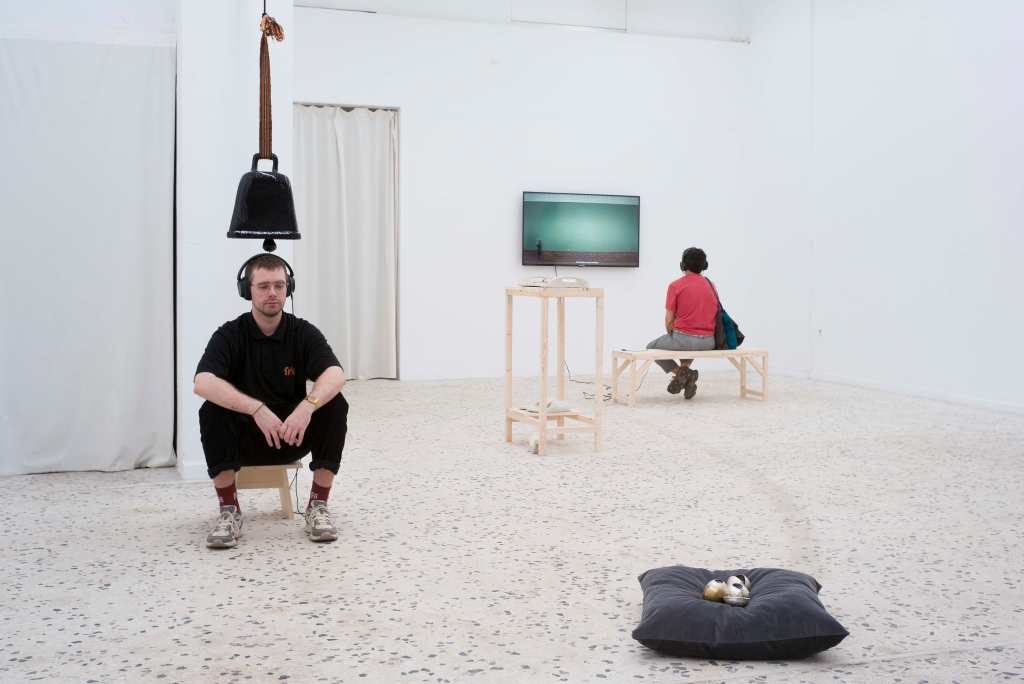
Sarah Sikorie presents a new work that echoes her recent experience at the sæter, the traditional mountain farm where, during the summer months, cattle are brought up to the mountains to roam freely and feed on seasonal herbs, while their milk is transformed into dairy products for winter storage. The practice dates back at least to the Viking Age and was traditionally overseen by women from lower social classes, known as budeier, or cowgirls. During her stay in Grøvudalen, Sikorie recorded the sounds of the valley, including the bells of the many sheep roaming there.
She became particularly interested in the bell as a symbol and as a living, temporary instrument. In many places, when an animal dies, its bell is literally “put to rest,” bringing its distinctive sound to an end. This led Sikorie to consider the bell in relation to another kind of awakening. In Christianity, the church bell calls the faithful to attention and awakening, marking time and summoning the community. But what about the cattle bell? Here, there is not one bell but many, each temporarily attached to a living animal, producing a shifting, dispersed soundscape. What kind of awakening do these bells enact?
Sikorie’s work opens a space for considering these questions alongside Greek pastoral traditions and the long history of bell-making and bell use. In Greece, bells have been associated with protective and apotropaic powers since antiquity. Their sound was believed to ward off evil spirits and protect both people and places. Bells were hung on animals as a form of protection, while shepherds also placed them outside their huts, where the wind could set them ringing. During the cold winter nights, their sound was thought to keep demons and goblins at bay, while also announcing the promise of spring. These magical and protective associations persist, in different forms, in Orthodox Christian practices as well as in traditional folk customs.
The seasonal movement of Greek shepherds further situates the bell within a cyclical understanding of time. Each spring, as flocks leave their winter pastures for the mountains, bells are attached to the animals in a careful process of “arming” the flock. In autumn, when the animals return to their winter pastures, most of the bells are removed through the process of “disarming” the flock, leaving only a few on selected lead animals. The bell therefore accompanies the movement between seasons, marking not only the passage of time but the changing relationship between animals, humans, landscape and sound.
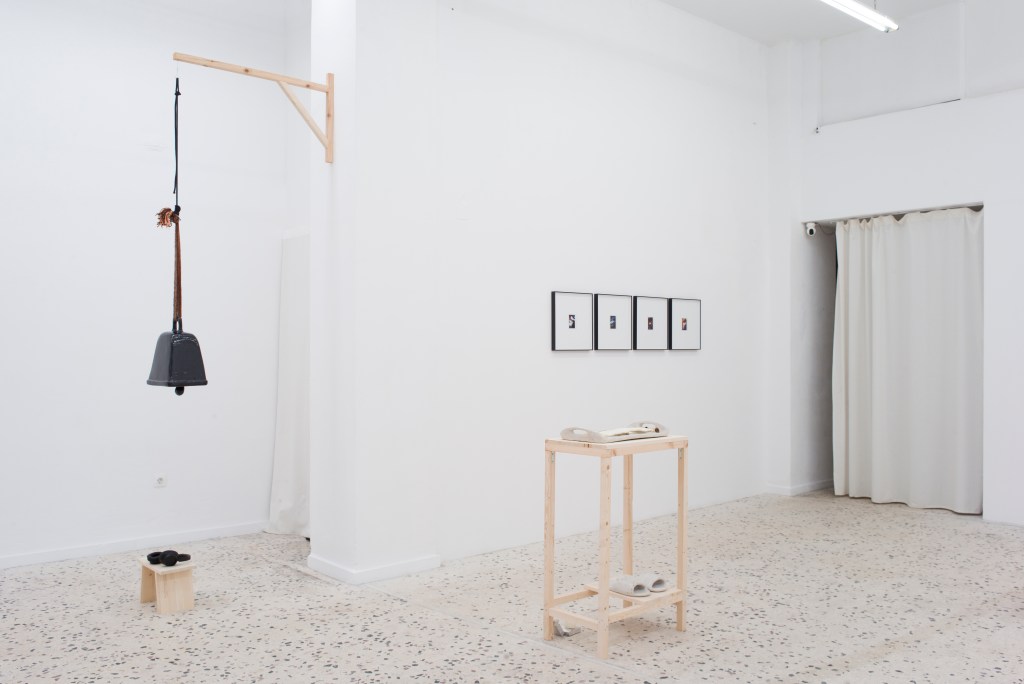
In Sikorie’s work, the bell hangs from a ribbon she has woven herself, drawing on a weaving tradition called “grindvev” (band weaving) with a deep geographical and historical reach, found in different forms across Europe and in Scandinavia dating back at least to the pre-Roman Iron Age. Suspended above the visitor, the bell becomes both object and instrument. We are invited to sit beneath it and experience its sound individually, encountering something that is at once intimate and collective: a sound traditionally carried across landscapes by animals, now detached from the flock and brought into the space of the exhibition.
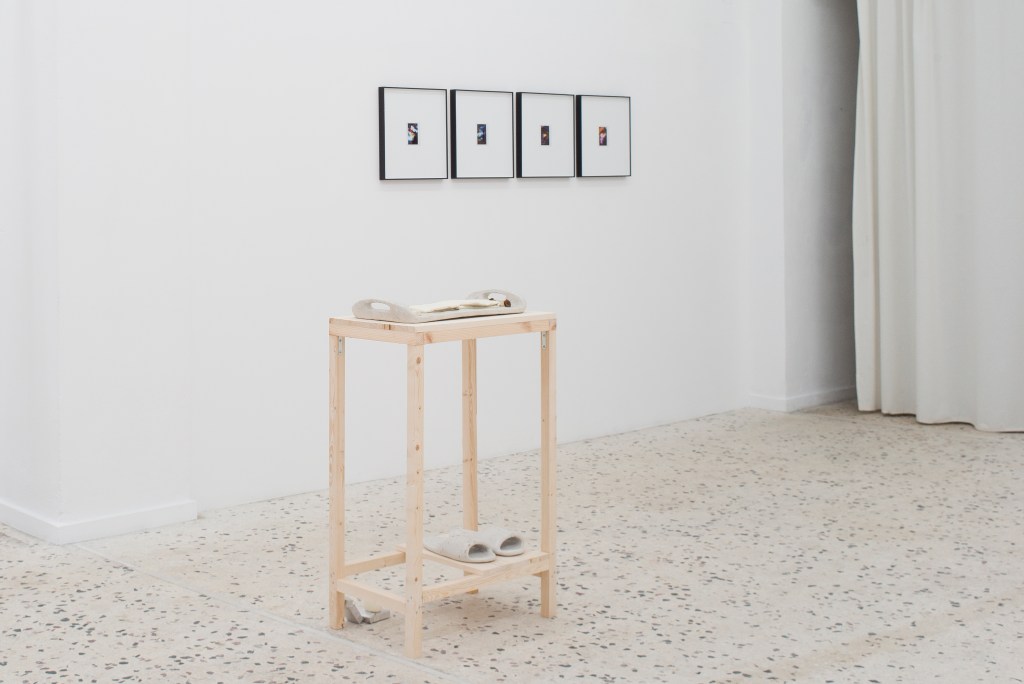
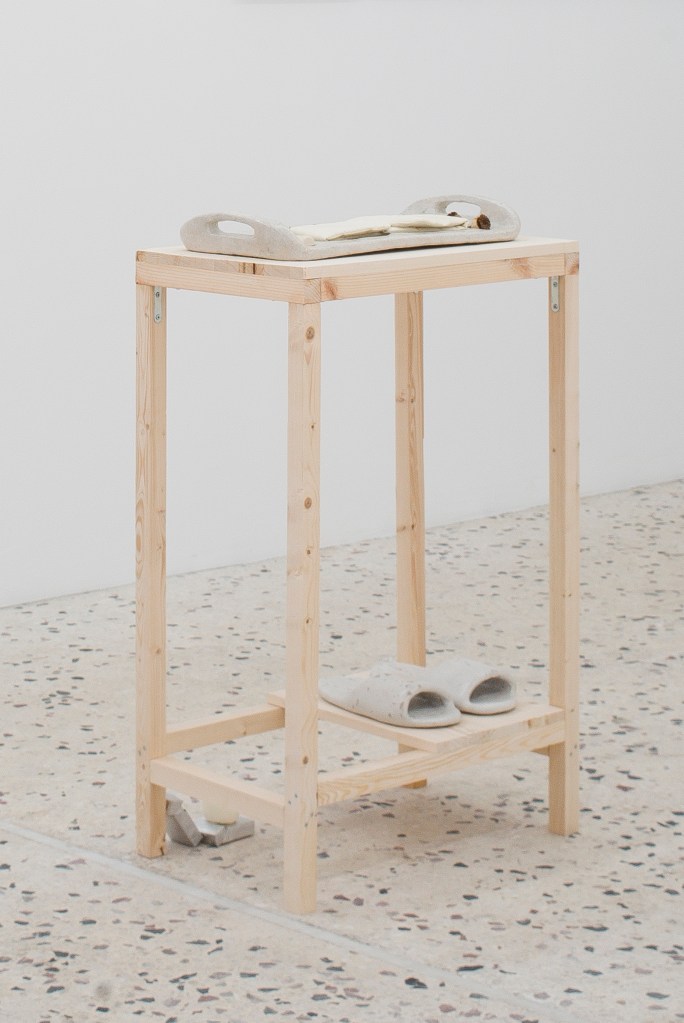
Miriam Hansen presents two works, “Sleep Offerings” and “Slippers”, invoking another dimension of “Winter Nights”: sleep as a condition shared by human bodies and the more-than-human world. In winter, nature enters dormancy; growth slows, seeds lie beneath the soil, and life withdraws into latency. Hansen brings this seasonal condition into the human body, moving between sleep, sedation and altered states of consciousness.
Familiar objects, such as the sleeping mask and slippers related to sleep, along with a tray containing medicines, drugs, and seeds drawn from contemporary wellness culture, mark the transition into another temporal and perceptual state.
At the same time, Hansen draws a subtle connection between older forms of ritual and the individualized rituals of the present. Rituals once helped communities collectively mark transitions, seasons, and states of being. Today, many of these gestures have migrated into private routines of self-care, where sleep and rest are increasingly approached as things to be cultivated, measured and optimized. These practices can offer genuine forms of care, while also reflecting a capitalist temporality in which even withdrawal from activity can become another form of self-management. Hansen leaves this contradiction open.
Tasos Gkaintatzis, in this section, focuses on pagan rituals from eleven locations in northern Greece, across the wider regions of Serres, Drama and Thessaloniki. Traditionally, the costumes and masks documented accompany agricultural celebrations and mark seasonal transitions.
The mask enables the transformation of the human into the animal. It is not simply a disguise, but a technology of becoming. Aby Warburg understood such gestures as attempts to enter the animal world in order to magically appropriate something of its nature and, through this process, transform the human in return. The mask thus suspends the boundary between human and animal.
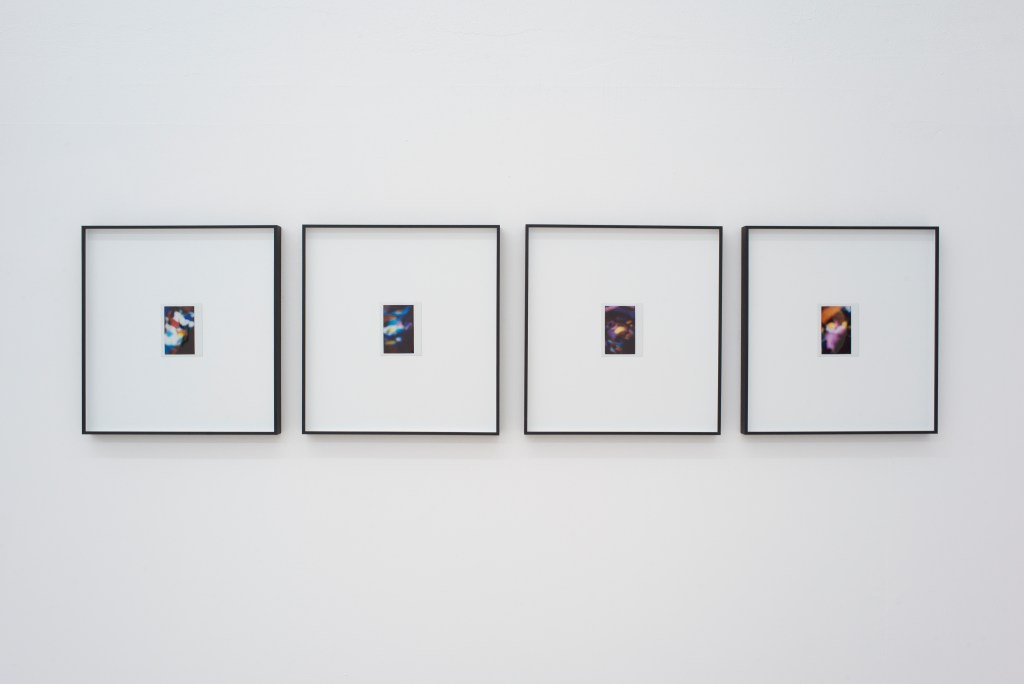
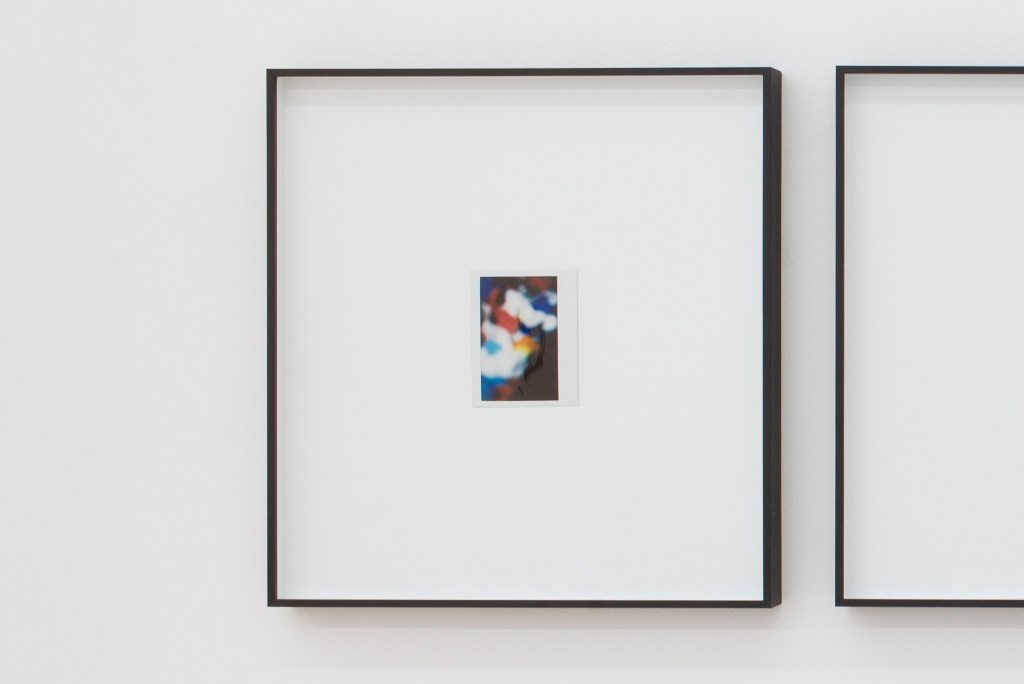
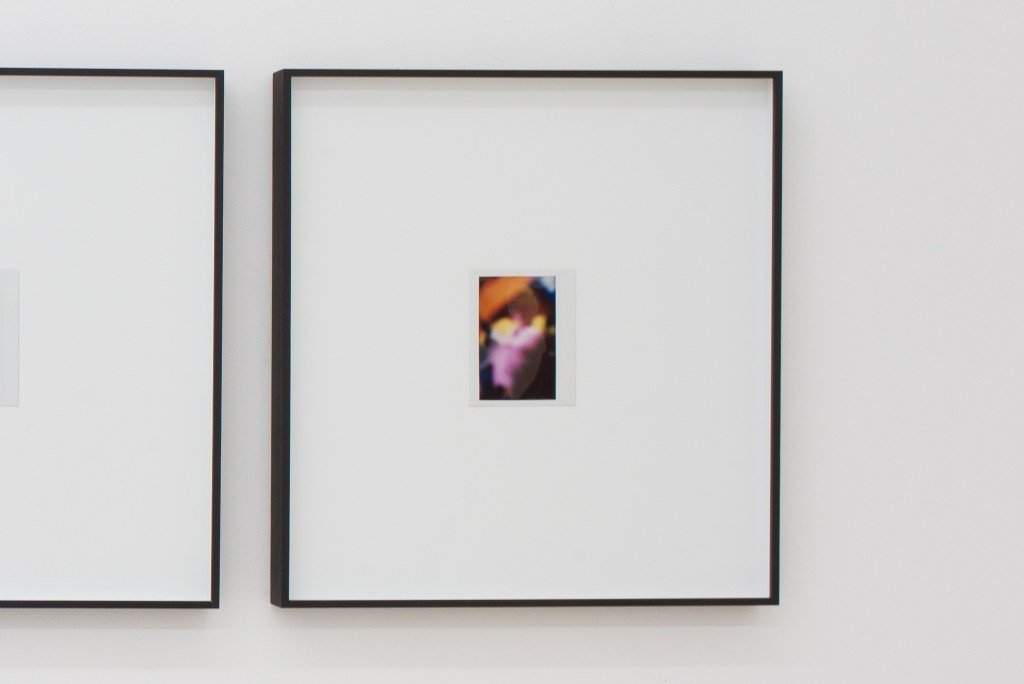
Through four Fuji Polaroids, we encounter one of the artist’s stops along this wider journey.
In Sochos’ community, the absence of masks made from organic materials led to an inventive artistic strategy. He photographs the masks at extremely close range, until they dissolve into flashes of colour and light. The abstract images recall confetti or the experience of looking directly into the sun. The ritual object is transformed through the act of looking, while retaining traces of the collective practice from which it emerged.
Rituals are symbolic acts. They represent and transmit the values and norms upon which a community is founded. According to philosopher Byung-Chul Han, they create a community without communication. Gkaintatzis turns our attention back toward collective forms of belonging and intimacy. His work does not simply document ritual; it asks what forms of togetherness remain possible through shared gestures, common symbols, repetition, and acts of mutual recognition, even as these very forms of community become fragmented.
This research was developed with the support of the Onassis Foundation.
Marthe A Andersen’s film “Dark Landscapes” expands the exhibition’s reflection into the museum itself, reclaiming the old National Gallery in Oslo as a ritual site. The film traces an ideological conflict between the painter J.C. Dahl, who defended burial mounds as sacred sites of memory and advocated for the National Gallery’s establishment, and the later Nazi regime, which sought to instrumentalize both museum and landscape for fascist propaganda.
Two paradigms emerge through Andersen’s idiosyncratic chronology, where Dahl and the Nazi regime are brought into uneasy proximity despite their separation in time. Dates and histories fold into one another, unsettling linear sequence. For Dahl, the landscape was the truest museum: the dead were not resources to be excavated or archived. The museum was not passive, nor merely decorative; it actively preserved memory, resisting the logic of human separation, bringing art and nature closer together. The Nazi regime, by contrast, exercised totalizing control over human and nonhuman bodies, employing a taxonomic logic of extraction, cataloguing and archiving that ultimately endangered the continuity of life.
Narrated by a solitary guide moving through empty halls, the film activates the space with archival fragments and projected images. The guide’s voice forms a reflective thread, guiding the viewer through layers of history and framing the museum as a site where meaning is continually reshaped. In this context, Andersen offers a poignant, multi-layered meditation on how rituals of domination have inscribed themselves upon land and memory, and how their echoes persist today, where crypto-fascist tendencies remain unsettlingly close to the surface.
Burial emerges again as a central motif. For Dahl, they belong to the continuum of life, as human bodies disintegrate and return to the soil, nourishing new beginnings. In his paintings, the human figure appears small against the monumental expanse of landscape. As Andersen says “…He carefully weaves the presence of the dead into his vision of the living land, conjuring those who once were, but no longer are.” Andersen takes this gesture further, exploring how the invitation of darkness is inherently double-edged: on the one hand, it can manifest as harm and separation, as in the necropolitics of the Nazi regime; on the other, it can be reclaimed as a generative, even witch-like aesthetic that honors the power of burial traditions, archetypal encounters with bones and skeletons, and embodied links to ancestry where the museum itself becomes a contested ground of meaning and memory.
Crucially, Andersen does not shy away from confronting the dangers of invoking lineage, situated knowledge, or Nordic tradition when they are mobilized in the service of exclusion and violence. Instead, she reclaims these same threads to propose a counter-vision: one of reparation between human, nonhuman, and more-than-human beings, woven together into a vibrant and playful atmosphere.
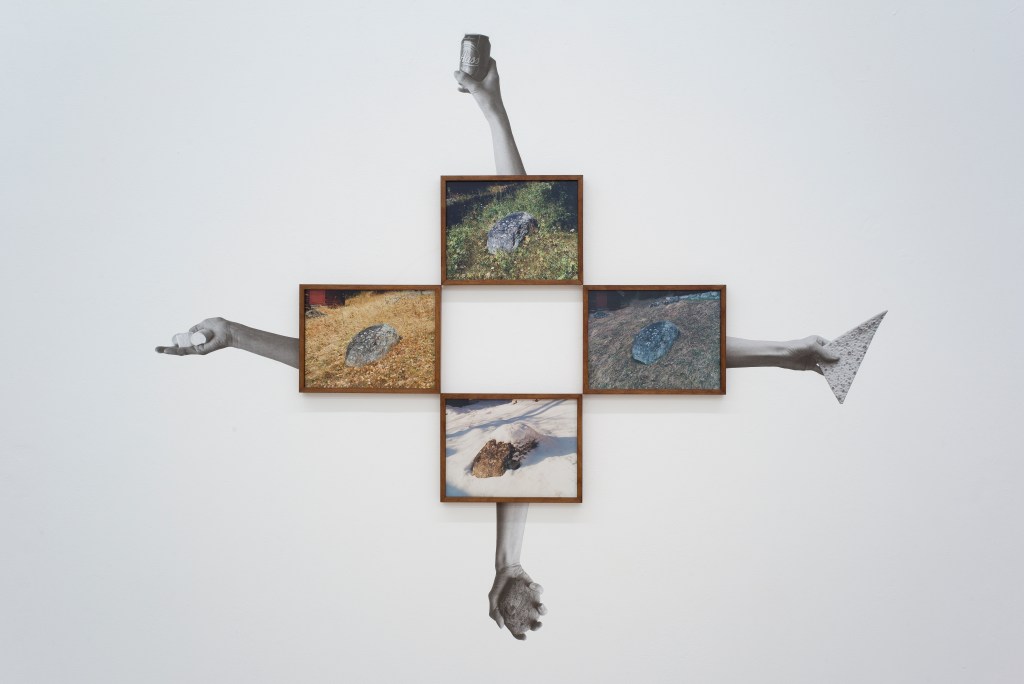
Úna Hamilton Helle presents a wall-mounted assemblage that brings together photographs and cut-outs.The work is part of her ongoing project Tunsteinen (The Yard Stone), which develops from a sustained engagement with the “imaginative subterranean”, as some stones were thought to be portals or homes for the land spirits that lived underground. Here, Helle asks how art can restore reciprocal, sensorial connections with the land, ones that resist extraction and instead cultivate intimacy.
Human presence is suggested through gestures rather than figures: open hands offering lefse (traditional pastry), beer, or, more playfully, marshmallows, or else holding stones in a process of becoming acquainted with them. In these moments, stones emerge as active participants in the narrative, echoing Nordic animist traditions in which trees, waters and rocks are recognized as persons. The offerings, both customary and improvised, extend ancient practices into the present with a spirit of attentiveness and humility. They resist ideals of purity or perfection, instead proposing ritual as a way of fostering connection and attunement.
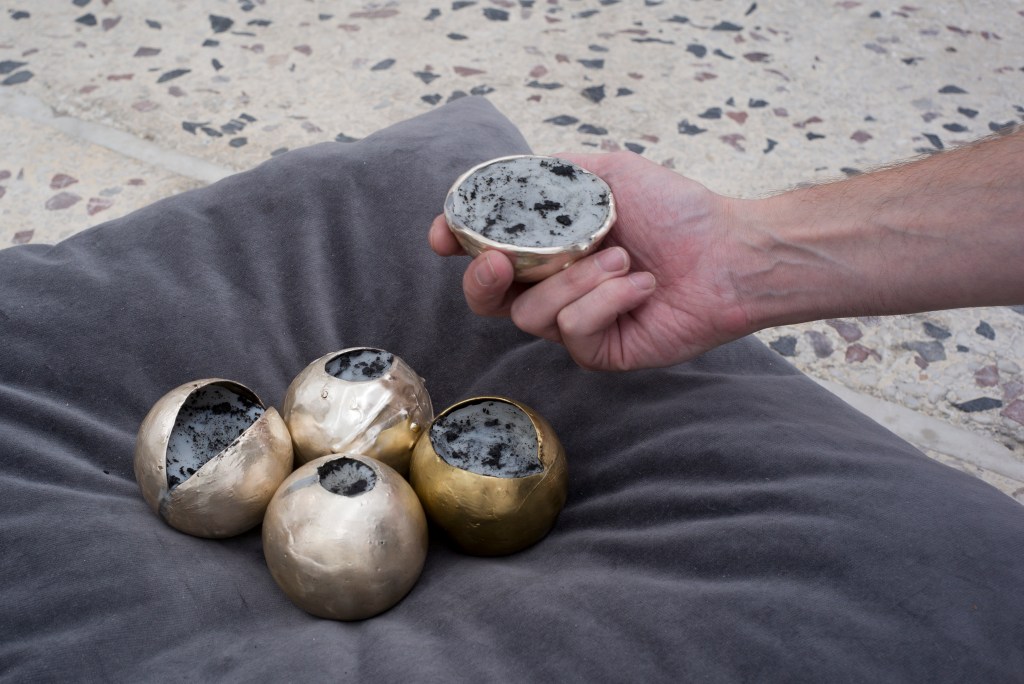
Elektra Stampoulou’s “seeds of doubt” is an olfactory installation in which metal-coated spheres contain olfactory components solidified in wax and coal. Resting on a velvet pillow, the objects hover between seeds, geological fragments and ritual forms, inviting an encounter that moves beyond the visual and into the body.
The scents are attempts at olfactory representations of critical points of the Anthropocene. Rather than illustrating ecological crises, Stampoulou makes it sensorial, allowing environmental histories to enter the body through smell. Scent, with its ability to trigger memory and association, collapses the distance between the human and the world that surrounds it.
The title introduces a tension between the seed as a promise of regeneration and doubt about the conditions that make regeneration possible. Within “Winter Nights”, this resonates with winter as a time of dormancy, suspension and latent potential. Yet the work complicates the familiar promise of renewal: what can still take root in a world transformed by extraction and climate change?
Coal brings another temporal scale into the work. A material formed through geological time, it is also deeply entangled with the industrial processes that have reshaped the planet. Held alongside wax and carried through scent, it connects deep time with the intimate scale of the body.
In this sense, “seeds of doubt” proposes doubt as a form of attention: a pause in which we might consider what kinds of futures remain possible, and what conditions they require in order to take root.
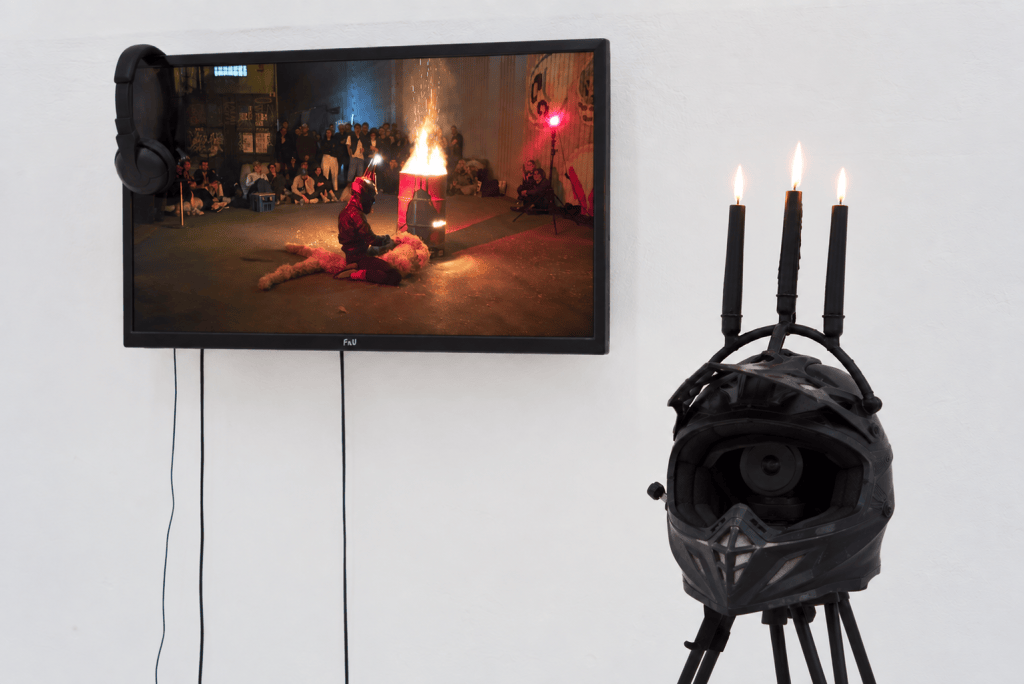
Maria Nikiforaki’s “Awakening Death”, presented through video and sculpture, is part of “Rituals for New Futures”, a trilogy exploring ritual as a speculative method for reimagining political, ecological and feminist futures. Across the three works, a heroine moves through a cycle of birth in Madrid, associated with air; death in Prague, with fire; and metamorphosis in Ljubljana, with water.
Set against the haunted landscape of Prague, “Awakening Death” turns toward soil, burial, memory and rebirth. The heroine moves through coal and fire, materials that carry both ritual and geological histories, but also the violence of extraction and environmental loss. Fire operates here as both destructive force and guide: it consumes, reveals and illuminates buried histories while opening a space for imagining other futures. Its presence also connects different ritual traditions, from seasonal fire ceremonies in Greece to northern European practices in which fire marks the passage between darkness and renewal.
Here, the journey leads to Milada Lake where the heroine encounters Morana, the Slavic goddess associated with death and winter. Traditionally, Morana’s effigy was cast into rivers or lakes in spring rituals, marking the end of winter and the return of life. Here, she becomes both companion and mirror: a figure through which ancient ritual encounters a landscape fundamentally reshaped by human extraction.
The video documents the performance “Awakening Death”, staged on the night of April 30 during Pálení čarodějnic (“Burning of the Witches”), a Czech tradition in which fires are lit to ward off evil and welcome renewal. The night carries a particular feminist charge, recalling the women historically accused of witchcraft and condemned to the flames.
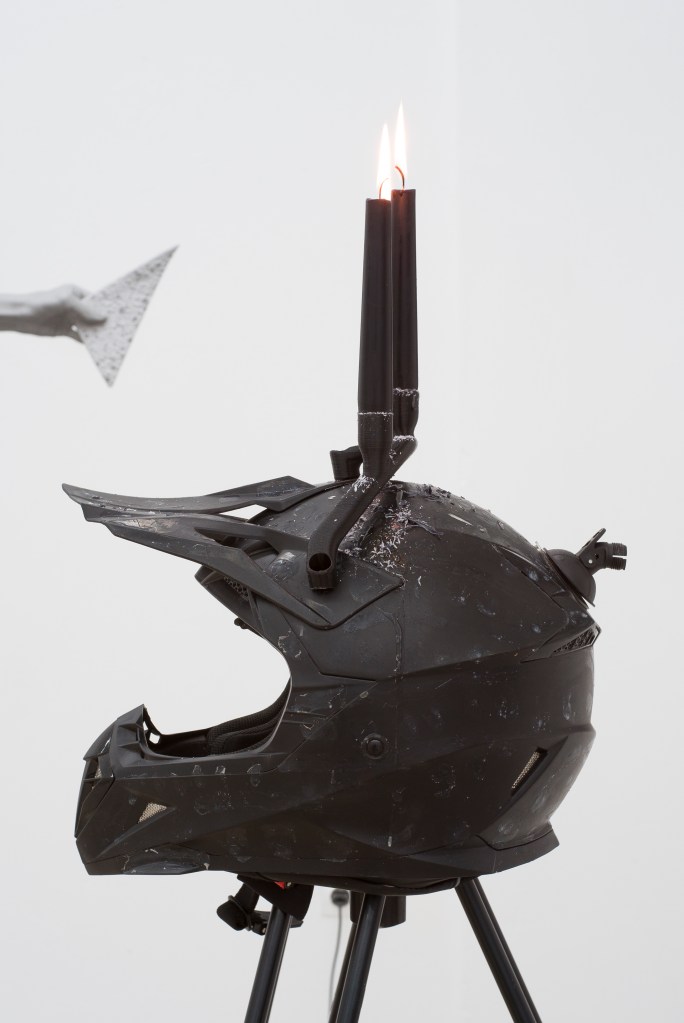
Accompanying this video is a performance prop suspended between a helmet and a church candlestick. In this ecclesiastical expanded-cinema arrangement, the object becomes part relic, part protective device, part speculative instrument. It extends the heroine’s passage beyond the screen, holding together ritual and fiction.
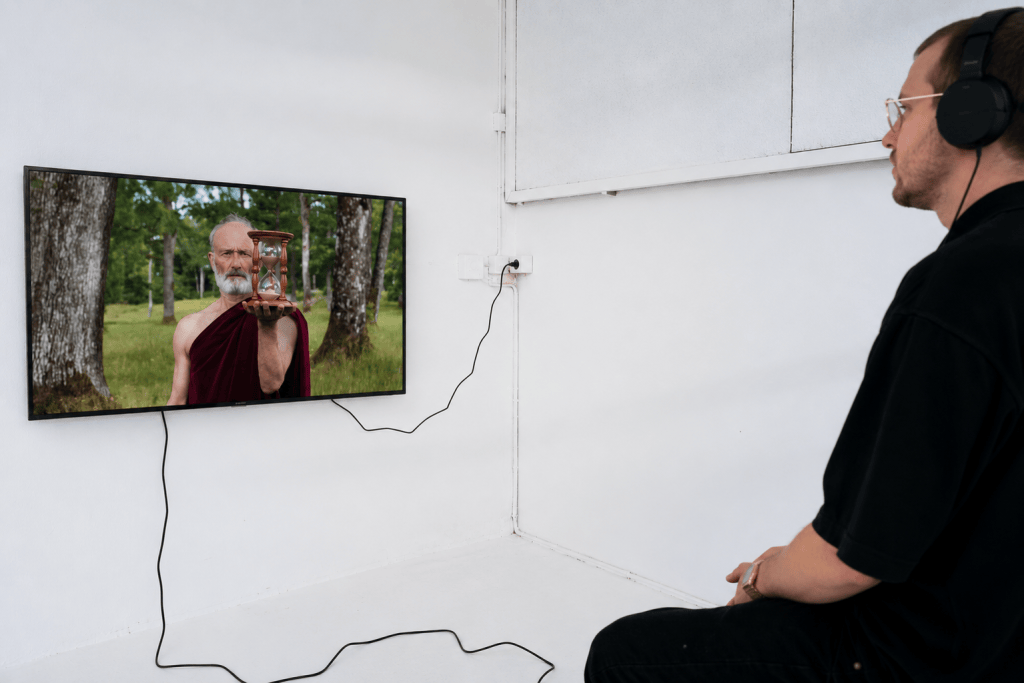
The exhibition cycle closes (or opens) at the Glass Room, suspended above the space. We take the stairs to enter it: a physical movement that becomes a threshold, carrying us into another dimension where endings fold into beginnings. Viktor Pedersen‘s film “I Am Here, All of Time” is a meditation on circular temporality, birth and rebirth. Structured in a triadic form, it follows an archetypal protagonist—baby, adult, elder (Father Time)—through entangled stages of life, suggesting that birth itself is a return. The work takes place at Viking Age burial mound at Borrehaugene, close to the artist’s hometown, as both setting and cosmological axis. Here, the soil, enriched by generations of burials, becomes a living threshold where death folds back into life.
The film foregrounds uninterrupted life cycles. Although Viking cosmology and Taoist thought do not explicitly describe reincarnation, both traditions articulate a form of return, an oscillation between dissolution and re-emergence. Pedersen proposes that the universe itself “imagined him” into being as a human subject, an idea that recalls both mythic creation narratives and phenomenological speculation on consciousness. Echoes of the Upanishads resound here, particularly the passage likening existence to a spider weaving its own web, or a dreamer living within the dream: “This is true for the entire universe.” Such references expand the film’s scope beyond Norse cosmology, situating it with in a trans-cultural meditation on cosmic consciousness and the question of how individuality forms and disperses when returning to, or emanating from, the whole —that is, the undivided totality of existence from which all beings arise and to which they ultimately return.
Temporalities overlap throughout: cyclical, mythic, mineral, linear. Clocks and hourglasses punctuate the film, markers of Western chronometry in tension with other scales of time. Quartz is a recurring presence: in modern timekeeping devices and as a navigational tool in Viking Age and often found in burial cultures around the world. Quartz embodies mineral time, spanning geological epochs while anchoring the most quotidian human routines, thus collapsing distances between deep time and daily life. Another manifestation of time appears in its embodied form: the senior man personifies Father Time (Chronos in Greek mythology, Saturn in Roman), holding his scythe while measuring duration through the slow passage of a snail.
The film culminates with the artist sounding an imaginary «lur», the ancient Nordic horn historically associated with funerary rites, thresholds, and apocalyptic warnings. Here, its resonance marks an ending that is also a beginning. His film thus echoes the larger logic of Winter Nights: that endings are not final, but part of cyclical processes of renewal, and that moving beyond human-centered models allows us to glimpse the entangled scales, ecological, geological, through which existence unfolds.
Winter Nights is supported by Creative Greece- Hellenic Ministry of Culture and Sports, OCA (Office of Contemporary Art Norway), Norwegian Embassy in Athens, Icelandic Art Center, Embassy of Iceland in Copenhagen and Transeuropa Festival.
The next chapter in Iceland has started with the research trip of Eleni Riga and Eva Ísleifs in collaboration with A-DASH supported by Culture Moves Europe and The Fjarðabyggð Cultural Center.
Useful information
Living Room, Marathonos 71, 104 35, Athens, Greece
Opening: 17/09/2026, 19:00-22:00
Closing: 10/10/2026, the exhibition will remain open until 21:00 with a curatorial tour at 20:00
Duration: 17/09-10/10/2026
Hours: Thursday and Friday 18:00-21:00, Saturday 13:00-18:00, or by appointment.
More info: https://livingroomathens.com/


Laisser un commentaire