anthr0morph
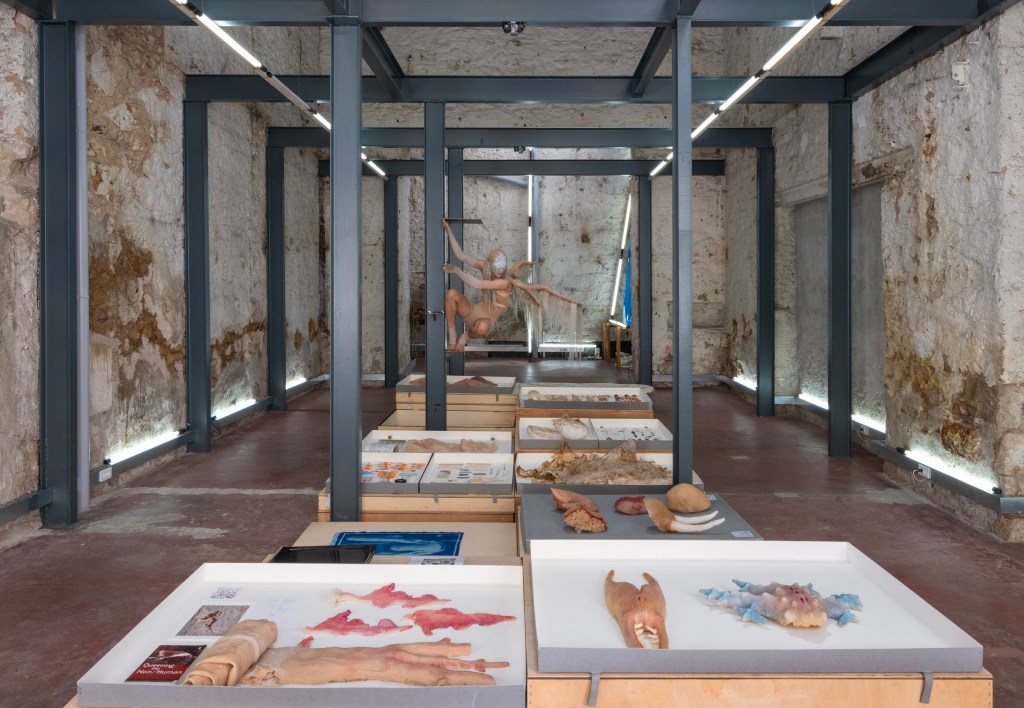
(Text by Eleni Riga) Living Archive of Transition, a solo exhibition by anthr0morph, curated by the artistic director Vassilis Zidianakis, engages anthr0morph’s living archive of gender transition, foregrounding methodologies of care and artistic practices that articulate transition as a condition, one that unfolds across human and more-than-human relations. The exhibition proposes an expanded understanding of transition: thinking within, through and beyond gender, while addressing questions of ecology, interspecies entanglement and cohabitation in a toxic environment.
Two key concepts run through the exhibition: transition and the living archive. Transition is not conceived as linear progress or simple change, but as an open, unstable and often contradictory process of transformation. Etymology reinforces this reading: the Greek word metabasis, suggests movement from one place or state to another. Similarly, the English term transition, from the Latin transitus, carries the prefix trans (“across,” “through,” “beyond”), underscoring passage as an experience of in-betweenness rather than a final state. The prefix signals force and motion rather than fixed identity; it articulates not only transition itself but the politics of transitivity.
Transition begins in childhood. Growing up on the island of Chios, anthr0morph developed an embodied relationship with the animal world and the more-than-human. In their artistic practice, they often assume animal form through masks and exoskeletons presented in the exhibition and activated through video and performance. A cyanotype created in collaboration with Claudia Hausfeld is also presented.
Paraphrasing Aby Warburg (Aby Warburg, A lecture on serpent ritual, Journal of the Warburg Institute, Vol.2, No.4, 1939, p. 277-292), by slipping into the animal mask, anthr0morph does not imitate the animal but is trying to transform its own self, extracting something from nature through the trans- formation of the human self1. The mask, both symbol and magical act, ratifies the bond between human and animal or plant. The embodiment of animal and plant as part of the self marks an initial escape from the hierarchical taxonomies invented by human history; it becomes participation in a radical community encompassing all forms of life, energy and matter.
anthr0morph operates as a living artwork: a hybrid being, a chimera composed of heterogeneous elements. In genetics, a chimera describes an organism containing cells with distinct genetic codes originating from different organisms. This reference is deliberate. It reminds us that even “nature” is constructed. Categories such as gender, race and sexuality have historically justified differences and hierarchies presented as natural, imposing normative versions of nature while marginalizing those who deviate from them (Cy Lecerf Maulpoix, Écologies Déviantes, Voyages en terres queers, Éditions Cambourakis, 2021, p. 54).
In direct dialogue with these concerns, the performance Post-Ecdysis, developed in collaboration with choreographer and movement consultant Marianna Kavallieratou, addresses the state immediately after metamorphosis: a body present yet still fragile, suspended in transition. First present- ed at the exhibition opening as an inaugural ritual, the performance recurs throughout its duration. anthr0morph ascends a staircase without destination, wearing a mask that prevents sight and an exoskeleton suggestive of wings that do not permit flight. The ascent operates as excelsior, a desire for transcendence, a symbolic gesture of rising from earth toward sky (Aby Warburg, A lecture on serpent ritual, Plethron, Athens, p. 25).
The second central concept, the living archive, is radically redefined. Conventionally, the archive refers to a historical repository and to processes of revival or reactivation. Here, the archive is literally alive: it is anthr0morph’s own body, a political instrument recording its history, traumas and transformations. The archive unfolds in real time and includes even gestures, bodies, or ideas not yet actualized, as it is co-shaped by visitors and participants. This sense is reinforced by the exhibition design, where much of the material is stored in dedicated archival boxes. Curator Vassilis Zidianakis approaches archival art as a means of exploring alternative narratives, contributing to the archival turn in contemporary art and curatorial practice, a shift from the archive as source to the archive as subject. Simultaneously, the exhibition is embedded within the ongoing documentary Holy Human Angel, directed by Angeliki Aristomenopoulou and produced by Anemon Productions, further amplifying the sense of an archive within an archive.
Through elective affinities, anthr0morph dissolves divisions between human and nature. The exoskeletons, like other elements of the practice, blur yet another construct: gender. Conceived and realized during the artist’s medical transition, the exhibition nevertheless exceeds it. anthr0morph engages in a process of de-identification, using the body as somatheque ( Paul P. Preciado, Can the monster speak?, Antipodes, Athens, p. 44), a living political archive. Historic and externalized modalities of the body, those that exist and are mediated through digital, pharmacological, biochemical and prosthetic technologies. The somatheque is mutating.
This exhibition constitutes the first chapter of the Living Archive and introduces a broader framework of ecotransfeminist ecologies. This inquiry draws on the work of French artist and medievalist Clovis Maillet, whose keynote lecture forms part of the Public Program. In a socio-political climate marked by neofascism, climate crisis, anti-migrant and anti-trans moral panic, Maillet and Emma Bigé, in their book Écotransfeminismes (Les liens qui nous libèrent, 2025), propose ecologies that think with and for non-normative forms of life. They call for new alliances: action against plastic pollution, against attacks on trans parenthood, and for the diversity of species, sexualities and genders.
The Living Archive unfolds in two complementary parts. The second part is dedicated to French writer and activist Françoise d’Eaubonne, who coined the term “ecofeminism” in 1974 (Pierre Horay Editions) in her book Feminism or Death (The book was translated in English in 2022 by Verso after it was reissued in French in 2020 by Le Passager Clandestin). D’Eaubonne argues that violence against “women” — and by extension marginalized bodies — as well as against “nature” (nonhuman life), is structural to patriarchy. Her thought reveals how systems of power permeate and affect all forms of life.
Françoise d’Eaubonne also mobilizes the concept of mutation to describe the possibility of radical restructuring of social, biological and political formations. Patriarchal and anthropocentric structures are not immutable; they can mutate into new forms that enable equality, cooperation with nature and the liberation of body and identity. Mutation blurs boundaries between gender and identity, human and environment, proposing that social change may function like evolution itself as adaptation and creative reconfiguration.
The Public Program expands the exhibition through guided tours, lectures and happenings, trans- forming the exhibition space into a site of dialogue and critical reflection. Within this framework, AMOQA (Athens Museum of Queer Arts) presents the happening Archive Disorder, a Desire to Merge Completely, an edible archive. The desire “to merge completely, to incorporate our loved ones and keep them forever close” is proposed as a radical rearticulation of kinship, a ritual merging that destabilizes the boundaries between self and Other.
Ecotransfeminisms by Clovis Maillet
Keynote lecture, March 6 at 7 p.m.
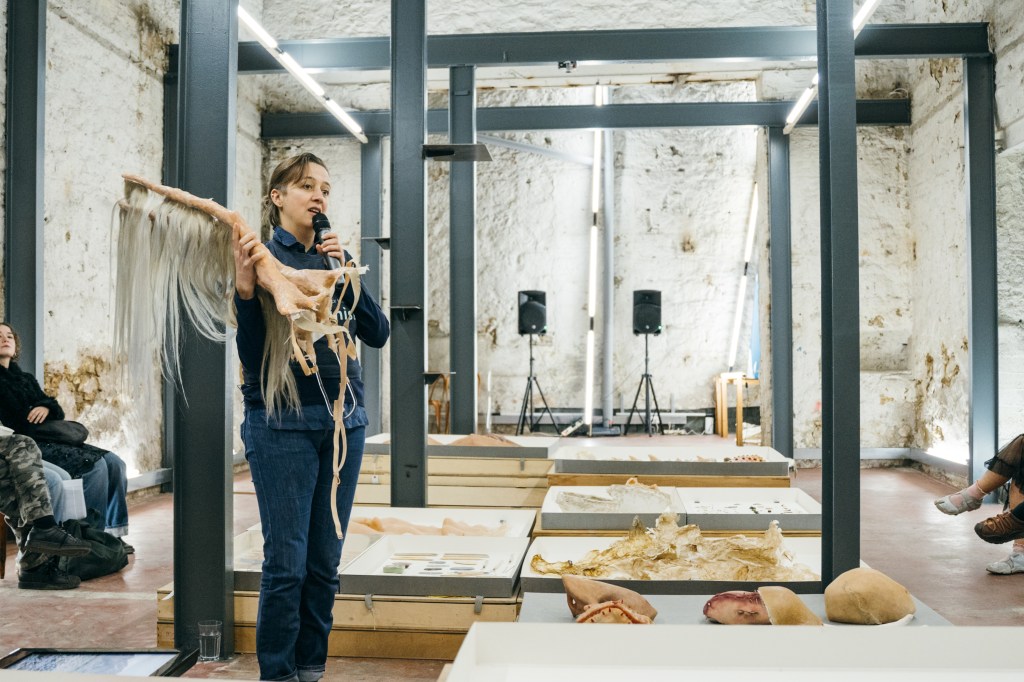
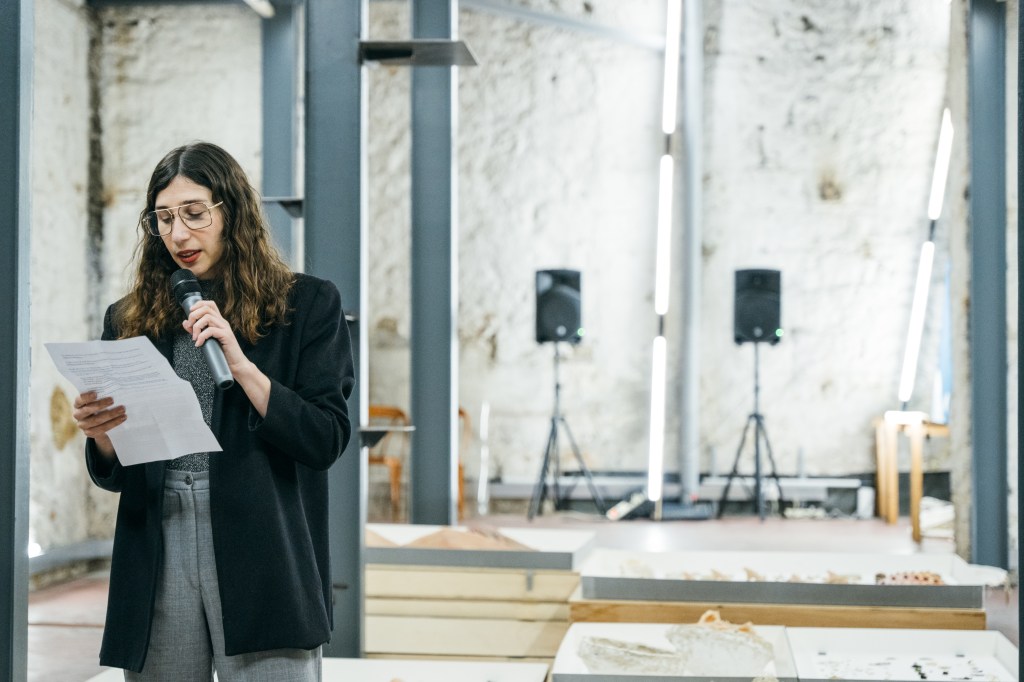
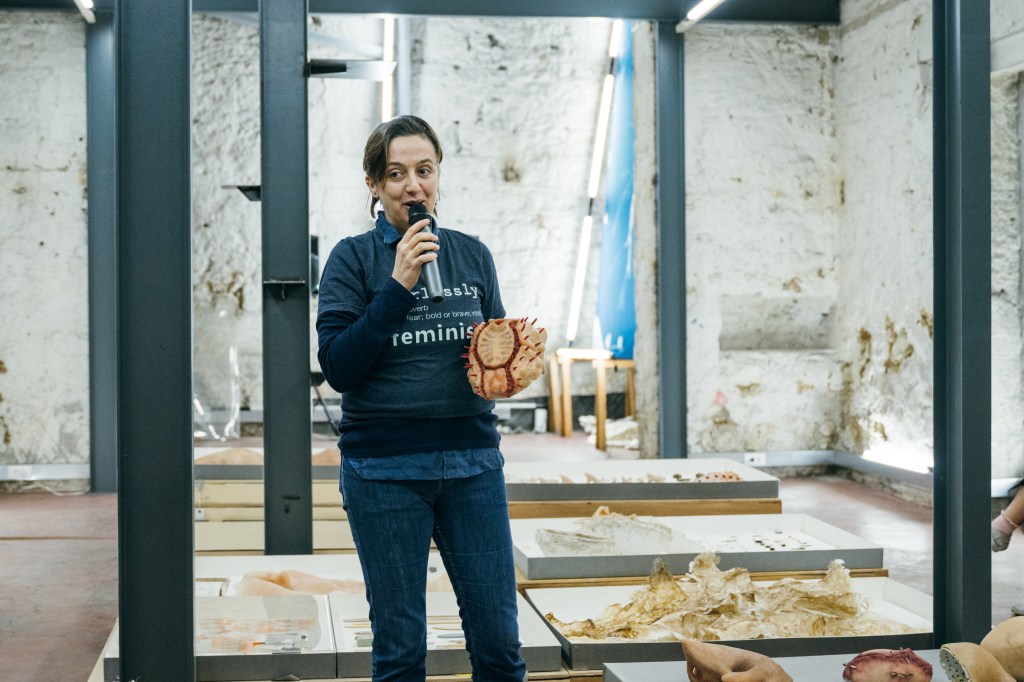
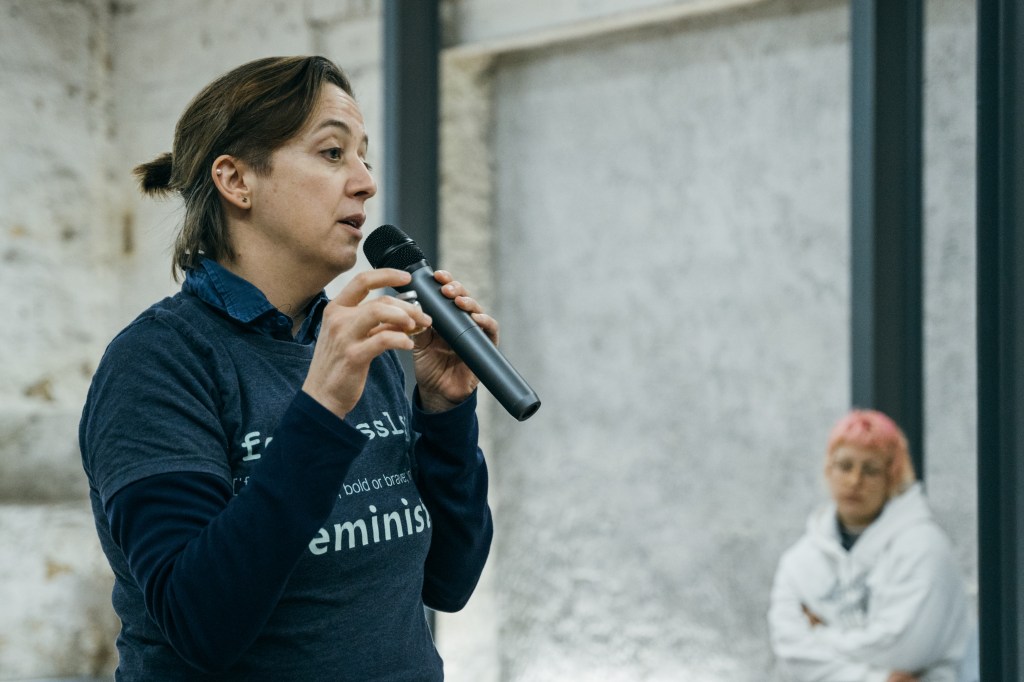
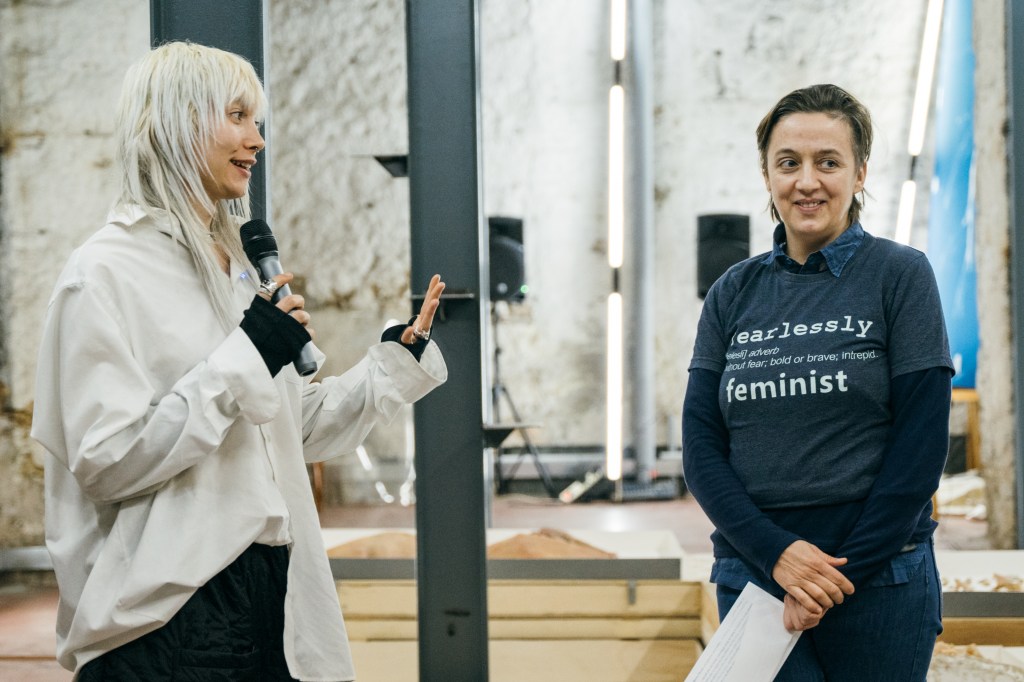
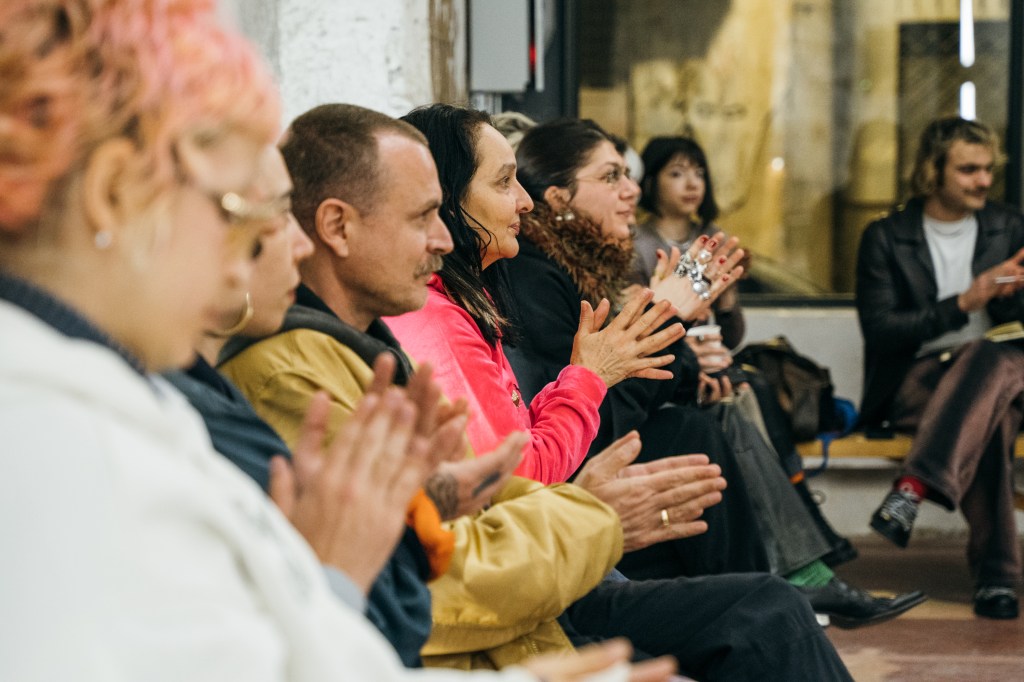
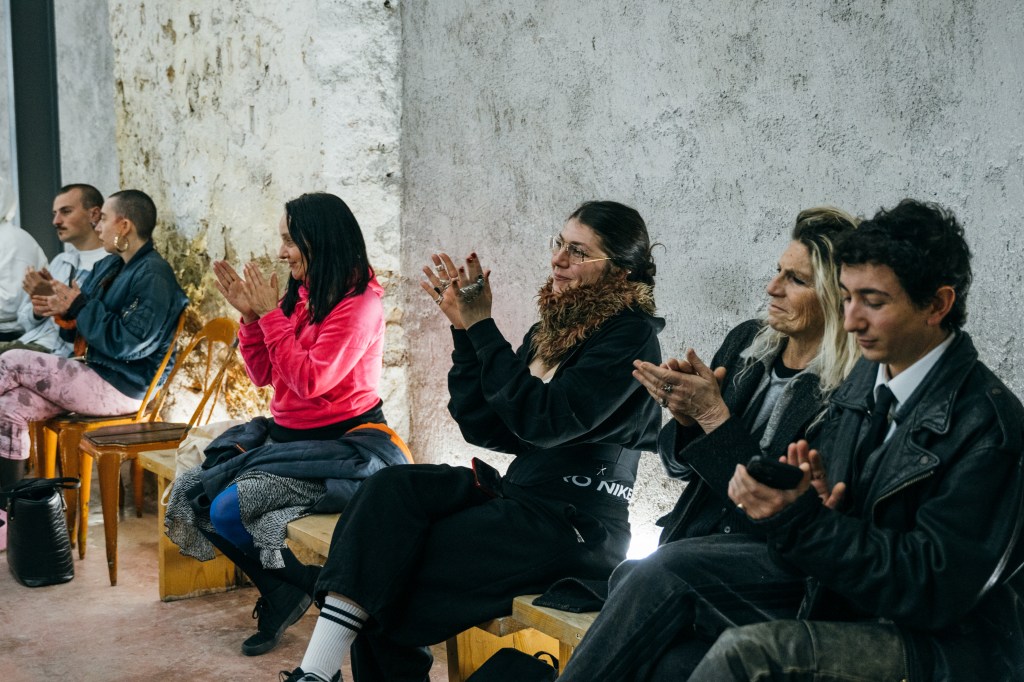
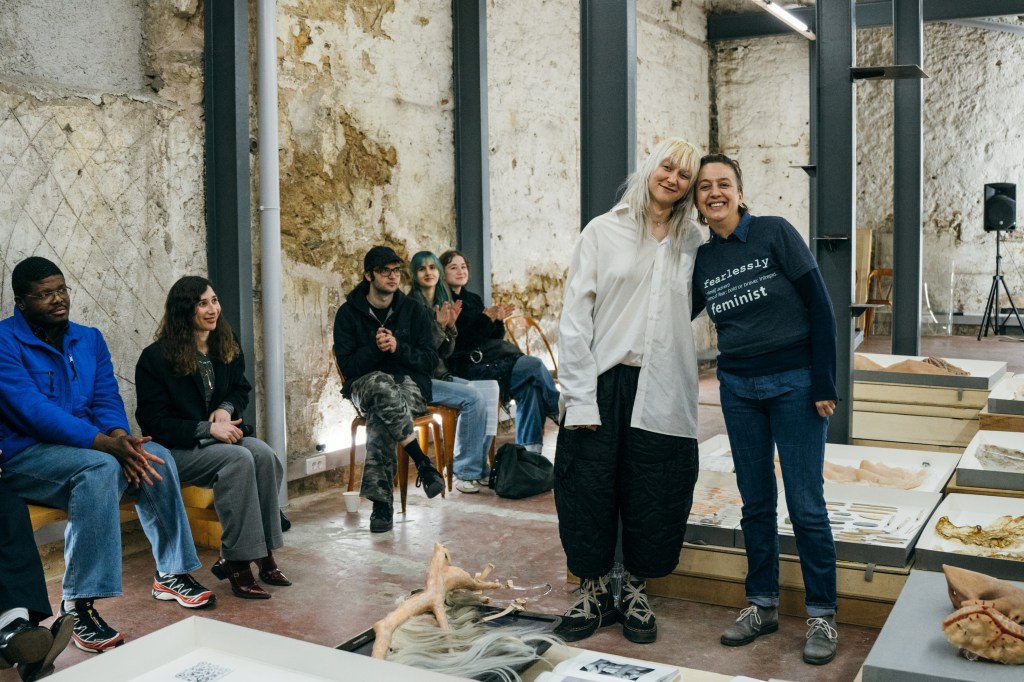
Clovis Maillet, historian and artist, co-author (with Emma Bigé) of Écotransfeminismes (Les liens qui nous libèrent, 2025), presents an introduction to transfeminist ecologies. This talk explores the entanglement of humans, animals, plants, minerals and other forms of non- human life, challenging the politics of separation that underpin fascist and anti-trans ideologies. Rather than proposing fixed identities or stable categories, Maillet offers ecotransfeminism as a set of transformative tools, practices for inhabiting a world in constant flux. Through theory and lived imaginaries, the talk invites us to rethink kinship, toxicity, transition and interdependence as active, collective processes of becoming and introduces the tone for this exhibition cycle on ecofeminist politics.
The event will be introduced by the curator of the public program Living Archive, Eleni Riga introducing us in the exhibition logic.
______________________________________________________________
Archive disorder, a desire to merge completely
19.04.202 | 18:00
Free Admission/Registration required
Archive Disorder, a Desire to Merge Completely is a happening based on the idea of the
“edible archive,” created by members of the AMOQA collective. It approaches the materiality of the archive through a table of offerings, where images and texts are transformed into edible forms. The audience is invited to participate in an experiential process in which reading, viewing and tasting coexist, activating a different relationship with archival memory. Through this gastronomic and conceptual gesture, the two archives enter into a creative dialogue, highlighting new ways of perceiving, exchanging and embodying knowledge. The event will be introduced by the curator of the public program Living Archive, Eleni Riga, forging affective connections between the archives. AMOQA (Athens Museum of Queer Arts) is a collective, hybrid initiative focused on networking researchers, activists, and artists engaged with the politics of the body, memory, and gender. By re-examining the concepts of “social space,” the “archive,” and the “museum” through a queer perspective, its aim is to provide a space where queer artistic and activist communities can meet safely, express themselves, and collaborate.
_____________________________________________________________
Save the Dates
Projection and discussion
26.04.2026 | 20:30
Language: Greek
Free admission/ Registration required
In the context of the collaboration with the National Museum of Contemporary Art | ΕΜΣΤ, a screening of excerpts from Save the Dates, an audiovisual archive for contemporary art, will take place. The material will focus on Greek and international artists who approach, through their work, the body as a political tool. A discussion will follow with visual artist Katerina Zacharopoulou and Eleni Koukou, Collections Advisor at ΕΜΣΤ. The event will be introduced by the curator of the public program Living Archive, Eleni Riga, forging conceptual connections and substantive interpretive bridges between the archives. Save the Dates, an audiovisual archive for contemporary art is the first digital, educational and research platform in Greece for international and Greek contemporary art, was formed over a period of 30 years and includes 776 television and radio broadcasts designed, edited and presented by artist and educator Katerina Zacharopoulou in the period 1995-2025. The platform is exclusively available at EMΣT and the Athens School of Fine Arts Library with free access.Courtesy of ERT | Hellenic Broadcasting Corporation (concession of material ERT Archives). The major sponsor of the programme is NEON Organisation. The implementation of the educational activities and the public programme of the archive are supported by The D.Daskalopoulos Collection Gift.


Laisser un commentaire