Solo show by Maxence Chevreau @Noucmas, Athens, Greece
9.11-11.12.2023
All photos by Alexandra Masmanidi
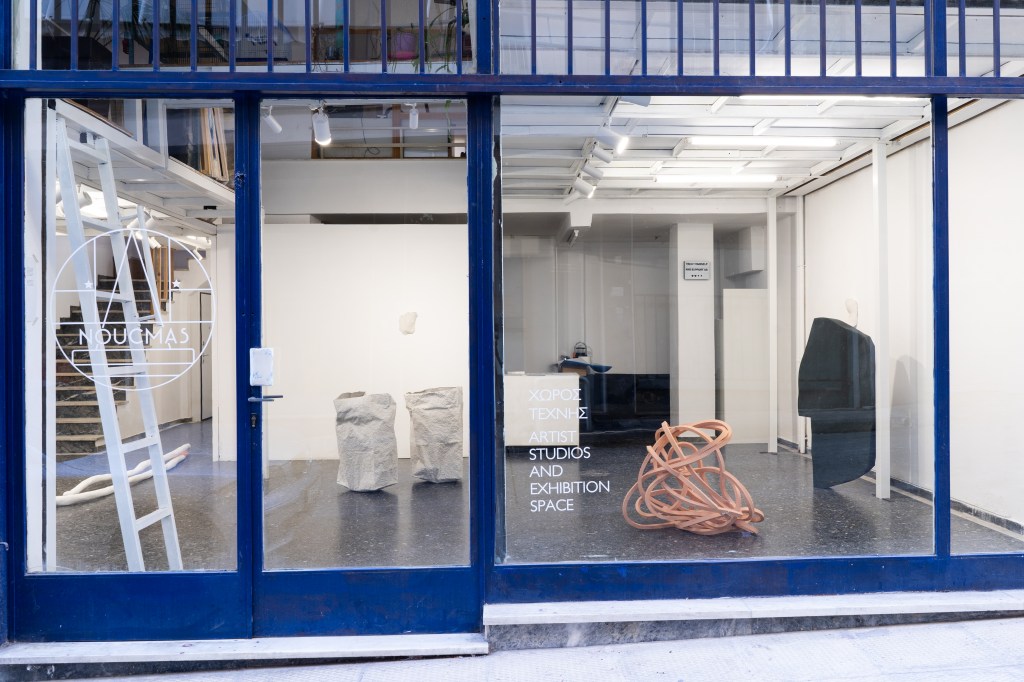
The exhibition “Tender Arrangements » consists of Maxence Chevreau’s new body of work inspired by his encounter with sensations, intuitions and objects around the port of Piraeus during his onsite research and a sound installation by Eleni Riga which functions as an air sock, indicating the direction of the wind. This exhibition attempts to tell a story of how we navigate in a state of constant transformation, providing signals, anchoring points and safe harbors to rest and wait in.
In 2021, the artist Maxence Chevreau collaborated with the curator Eleni Riga during their residency GENERATOR #7 at the art center 40mcube in Rennes, France. As a result of their creative dialogue an essay entitled “Tender Arrangements” was born, offering some thoughts on his sculptures presented in the collective exhibition “Tendres Gravats” (Tender Rubbles) in Rennes. The title evokes the way the artist approaches material: tenderly, in a soft and delicate way, by tending physically towards the materials he works with and by being attentive to their properties.
In 2022, Maxence Chevreau, on the occasion of his collaboration with NOUCMAS, reconnects with the marine landscape through Piraeus. In the past, while he studied at the Finistère in west Brittany, he often used to wander around the port there and this is how he became familiar with the continuous inward – outward movement of the sea as well as the aesthetic values of found objects that vary from organic materials to marine equipment and fishing supplies. Here in the exhibition « Tender Arrangements », he attempts to transform these objects with materials, forms and colors motivated by his one-month residency in Athens.
Collapsing the idea of the other, a continuum is formed between the objects, the body of the artist and the gestures resulting from their interaction. According to the Brazilian Czech-born philosopher Vilém Flusser, each gesture can be analyzed as the expression of a particular form of consciousness, that is, as a particular relationship between the world and the one who gestures. When Maxence Chevreau introduces a gesture in the space in the form of sculpture, he expresses a certain way of being in the world, one that privileges resilience over certitude. This is why he creates a system of navigation with sculptural arrangements that indicate possible exhibition paths.
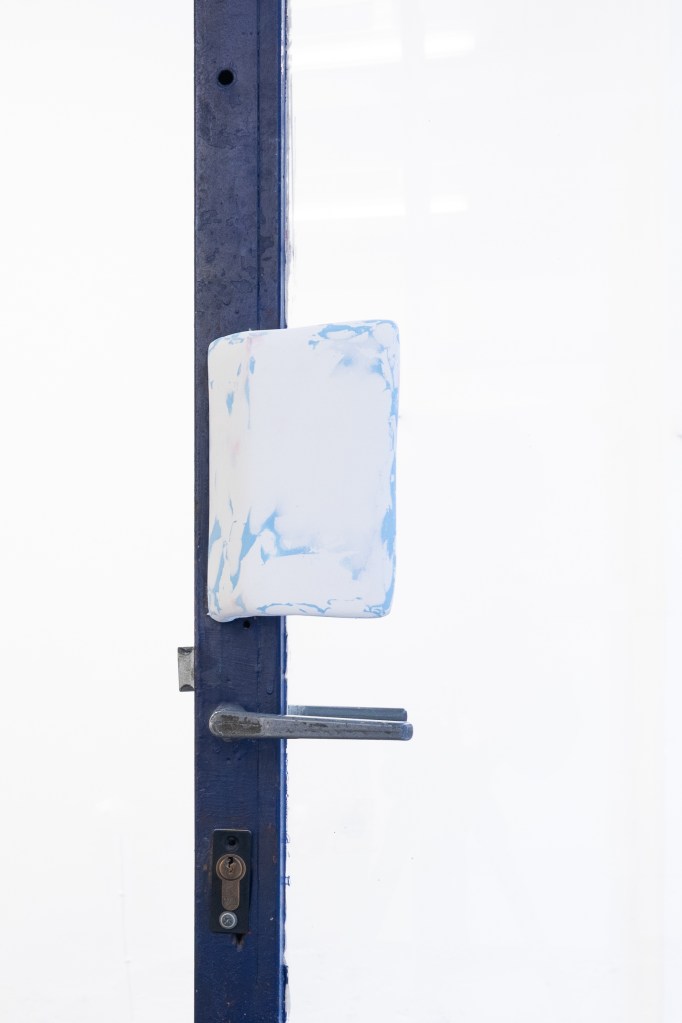
The first indication is already found at the entrance. Maxence has made a functional intervention on the door handle, encouraging the visitor to touch the artwork and resolve momentarily the boundaries between the exterior and the interior space.
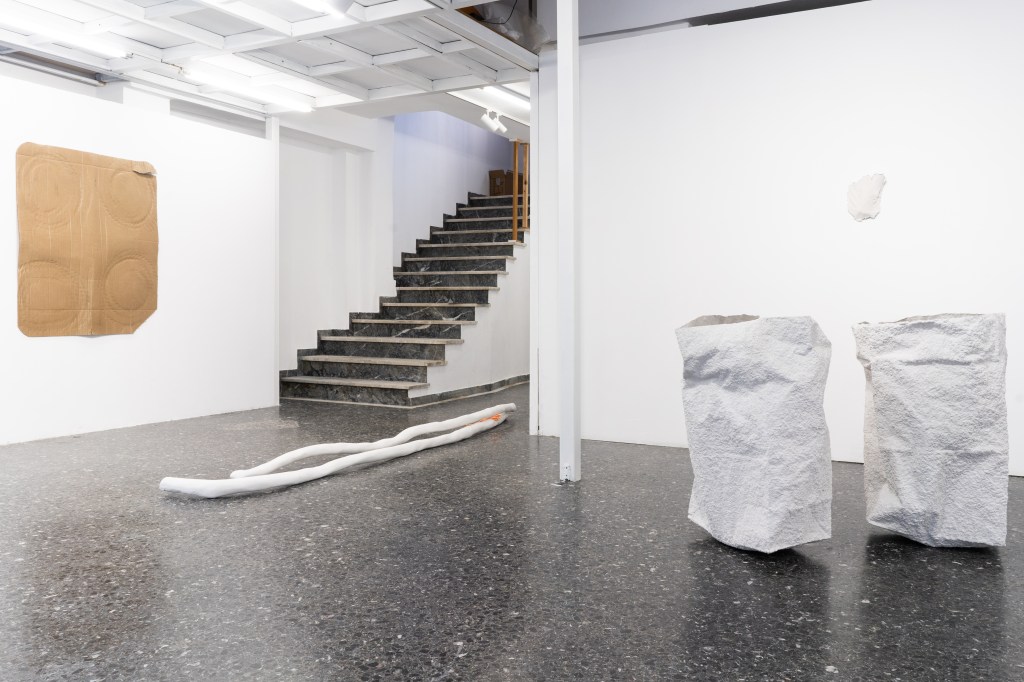
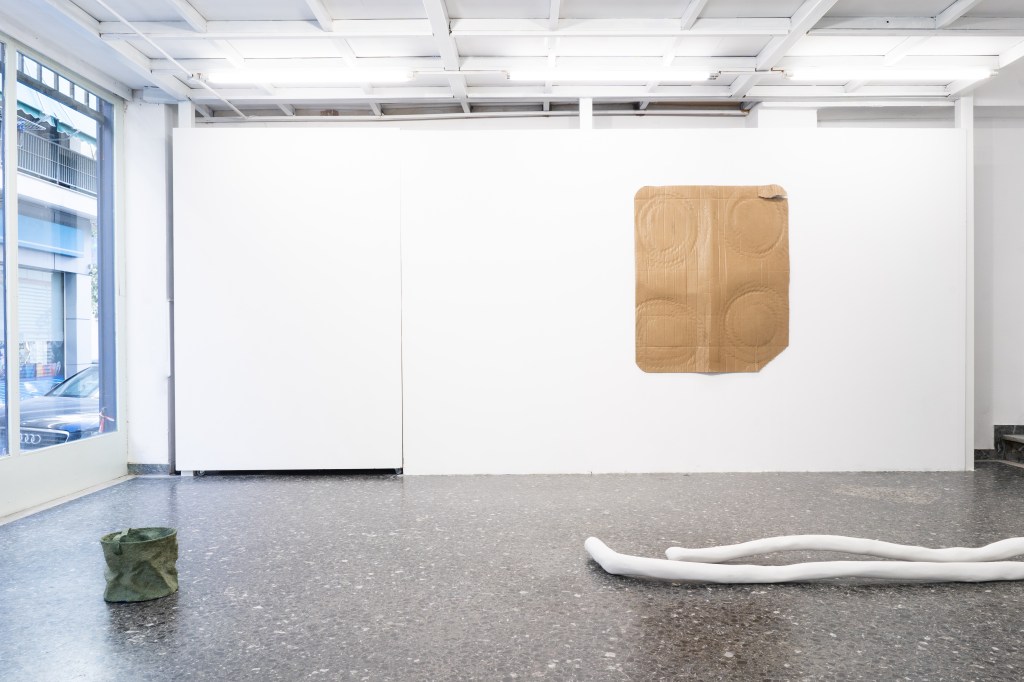
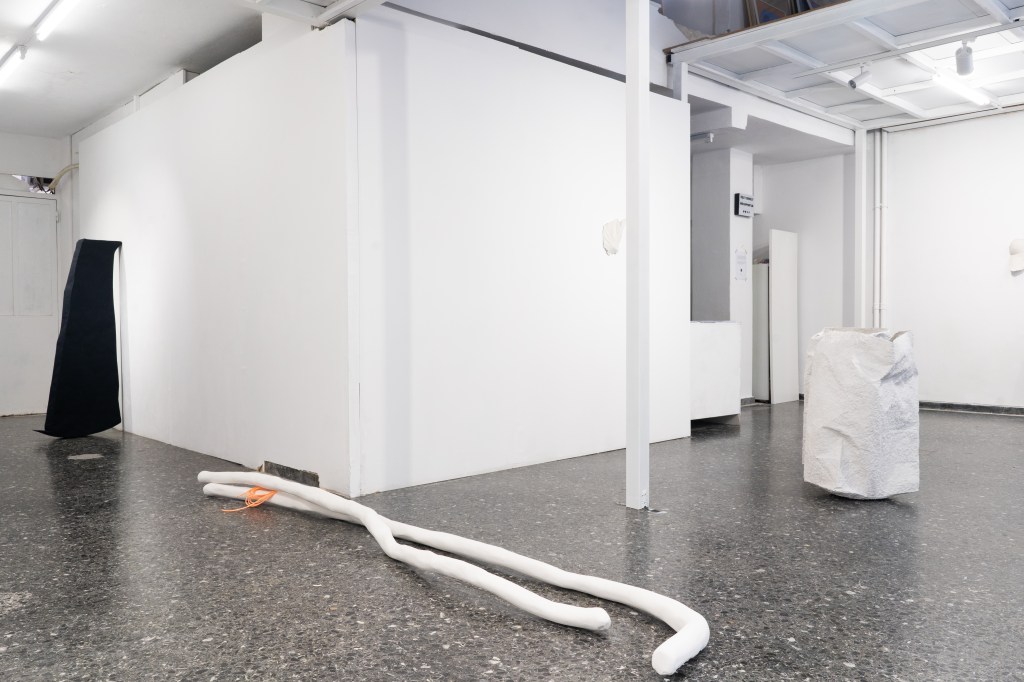
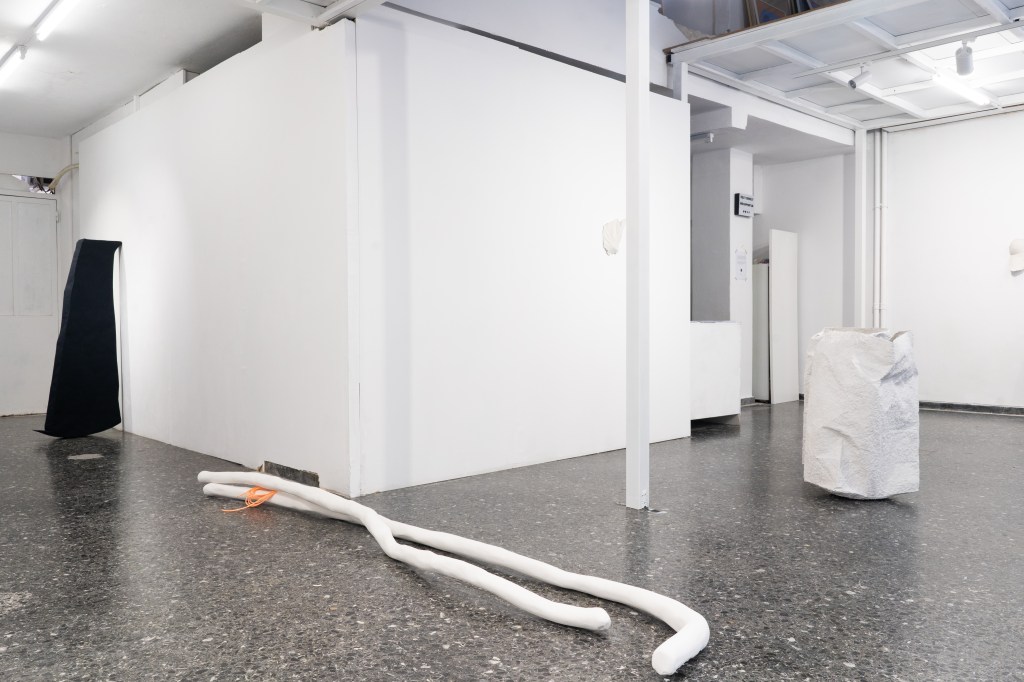
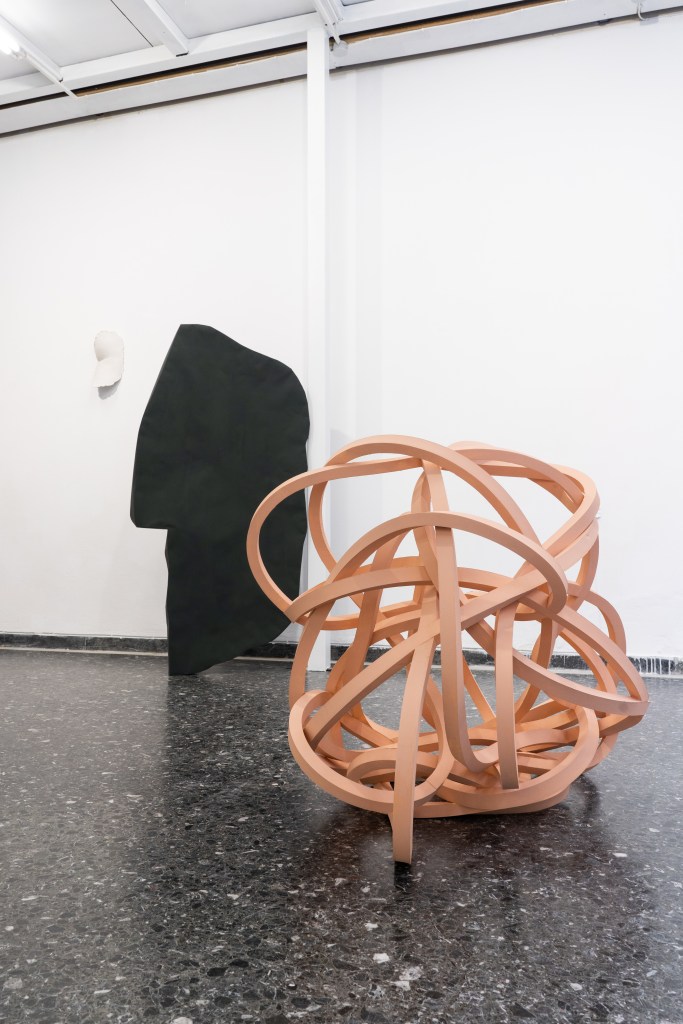
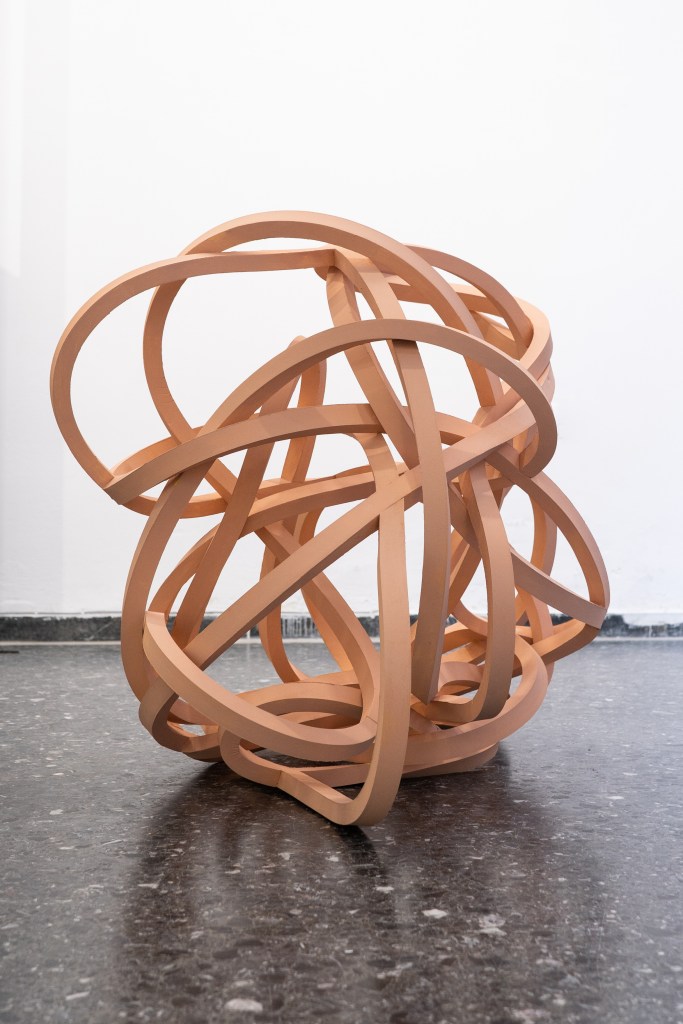
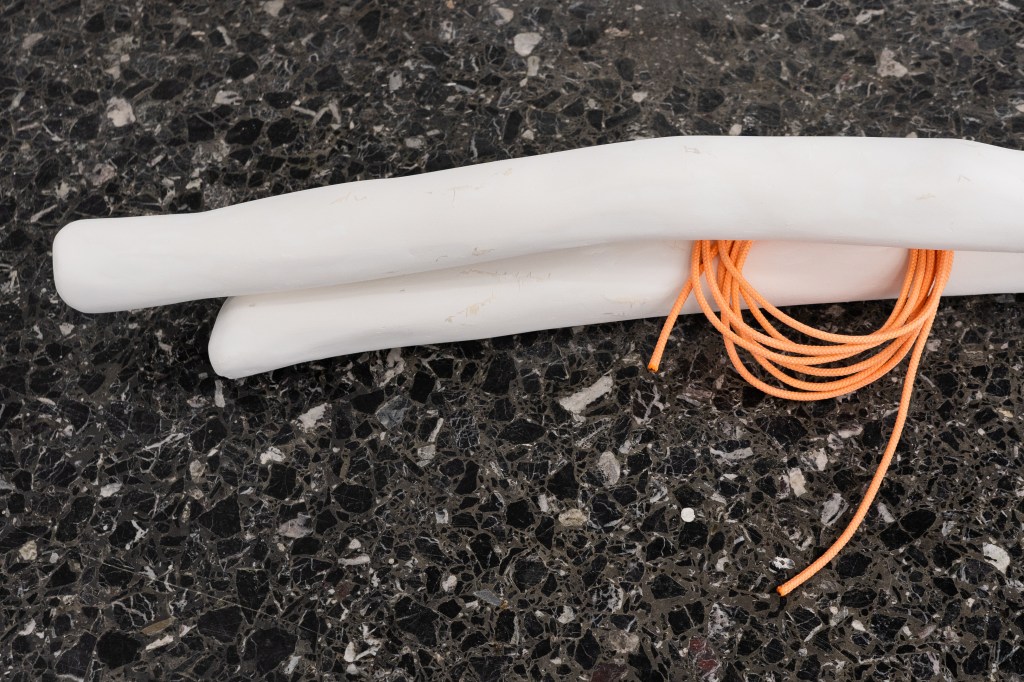
Two sculptures made of plaster tackle the idea of a support system, natural or manmade, whether it is the legs of a human being, the trunk of the tree, the trellis of a climbing plant or simply the columns of a building. Such structures, along with the ones that come from the nautical realm -for example a foamy material that floats in the sea – are favored in the exhibition. Overall, the aforementioned elements can allow us to temporarily fix something in order to provide time for rest and growth.
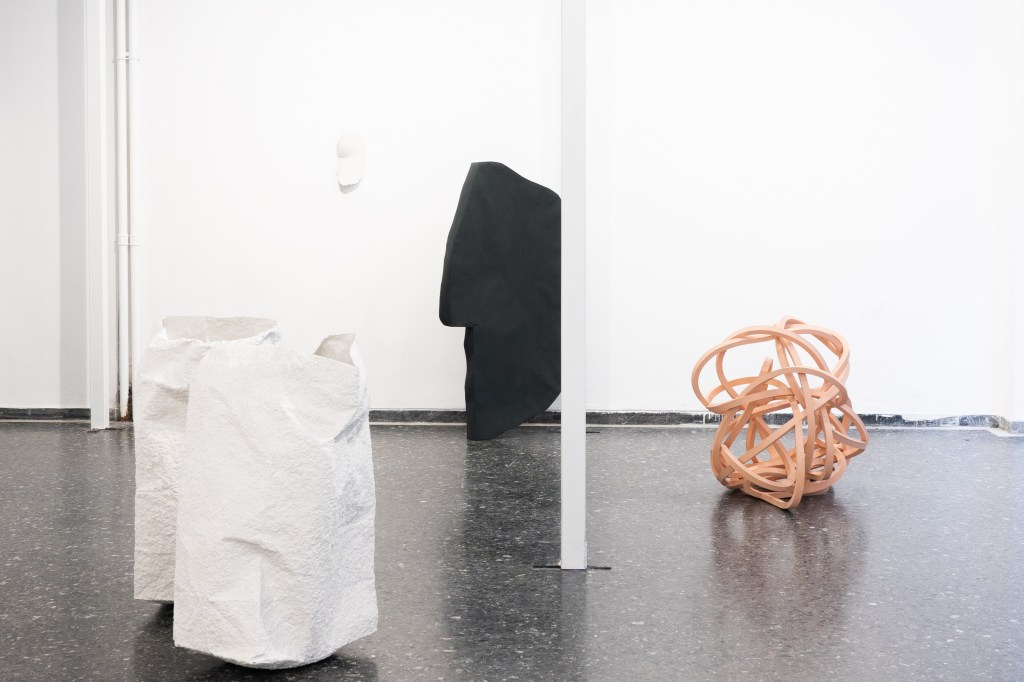
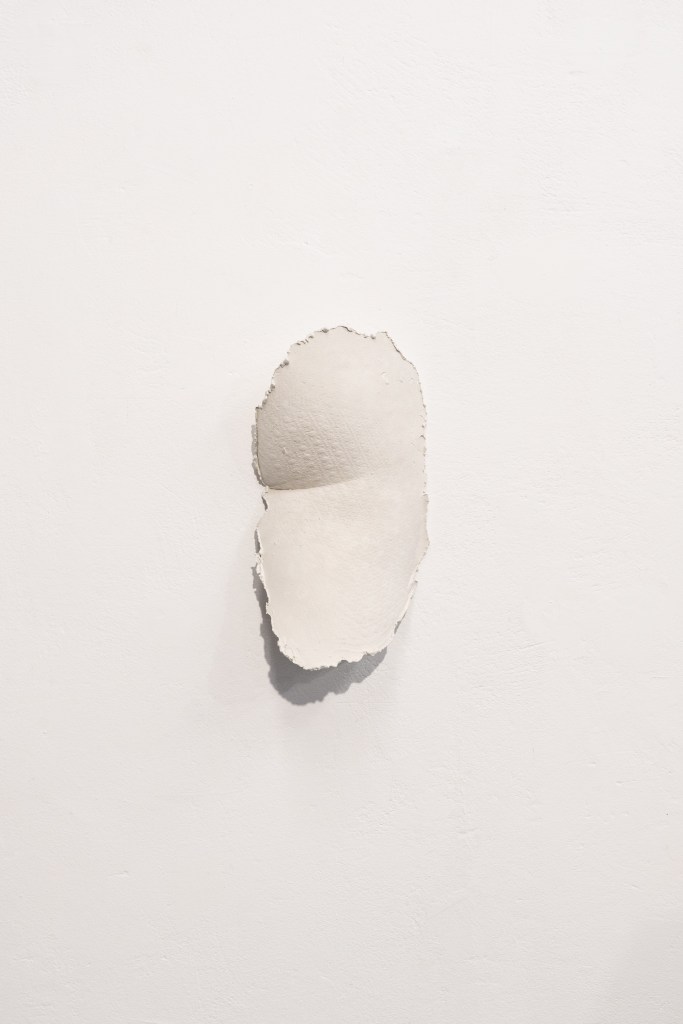
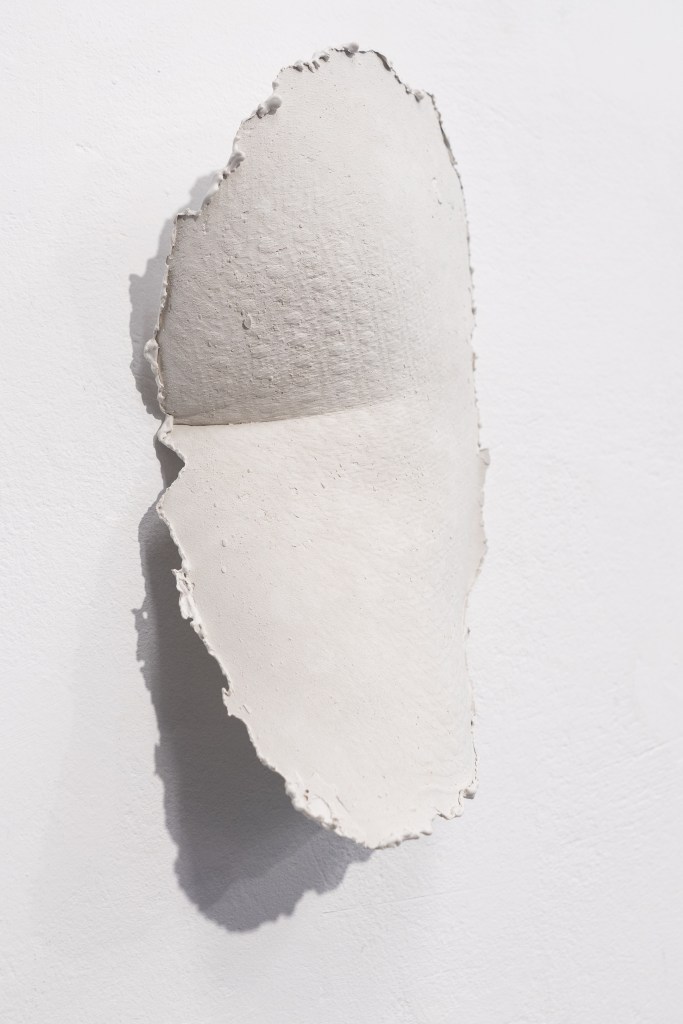
Moreover, elements such as oversized paper bags covered in plaster like fossils propose flexible structures. These objects are shapeshifters, much like water: they take the form of the things we gather inside, carrying the possibility of change and reciprocity. The artist comments on the attraction or repulsion that objects have on him and hints that this is a mutual process.Nevertheless, the gesture of the artist is still the most apparent as the crumples indicate how his hands originally shaped the object. Covering τηε with plaster provides some kind of ephemeral conservation of this very gesture. The sculpture, lightweight and not anchored to the ground, looks as if somebody tried to lift the upper part, giving a sense of suspension.
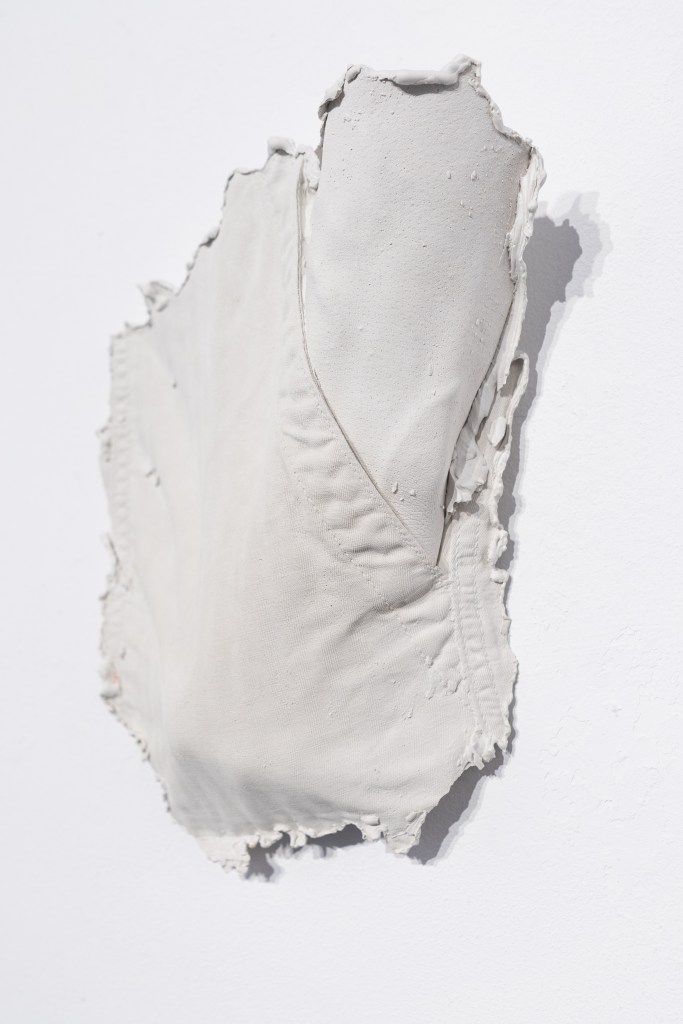
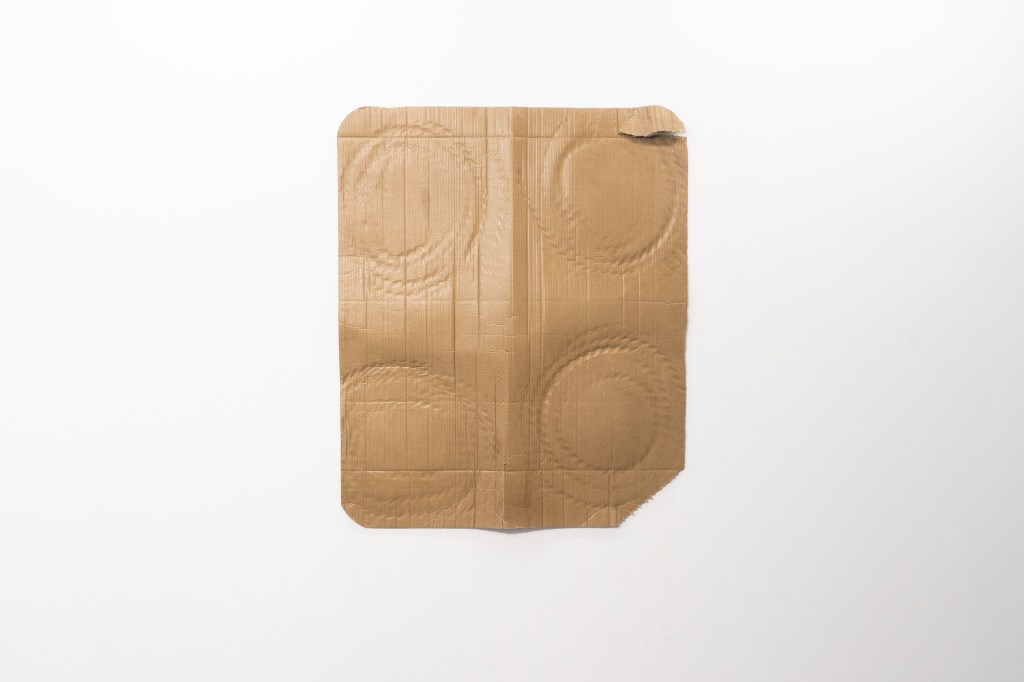
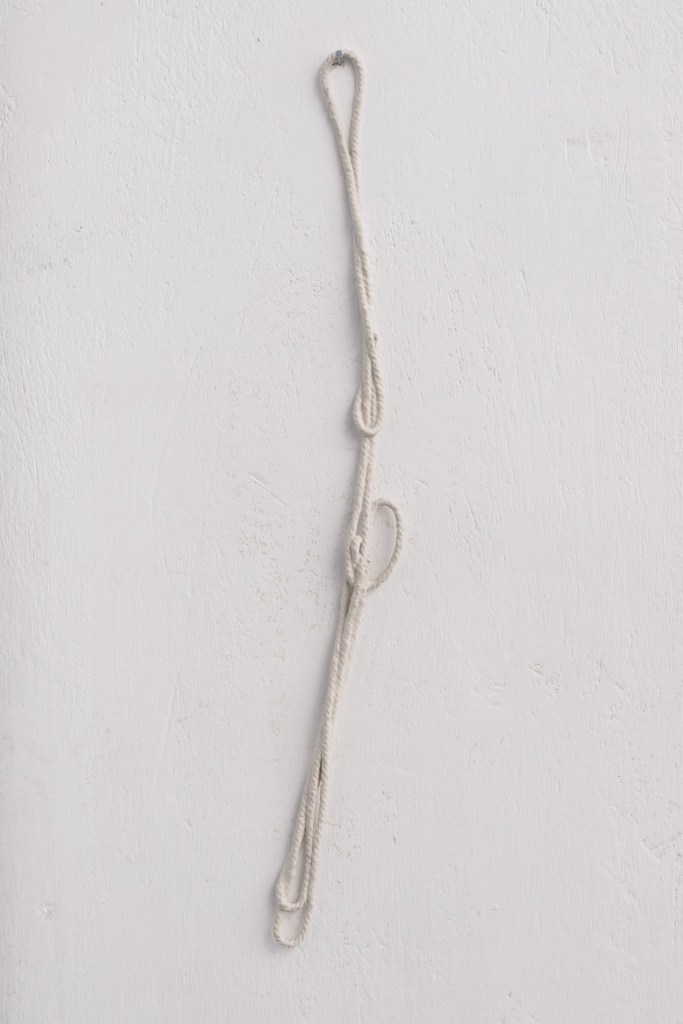
A recurrent element is imprints linked with the human body. The motif of a woven chair on our flesh after sitting for a long time at a Greek tavern or the seams of jeans pockets that look like the bones of a fish with a closed fist inside, indicate how the artist reinstates corporeality. He suggests a shared intimacy between our bodies and the things we come in close contact with. In parallel, found objects like cardboard where ropes have been ‘resting’ for an extensive period are reminders of life outside of the white cube, specifically at the port of Piraeus.
From the four cardinal points, a female voice is introduced into the space. She talks about how the wind affects her direction and psychological state. Eleni Riga undertakes an imaginary
journey, responding tenderly to the works made by Maxence Chevreau. This sound installation has been conceived as a gesture of support, much like a friendly stroke on the back or a gentle caress.
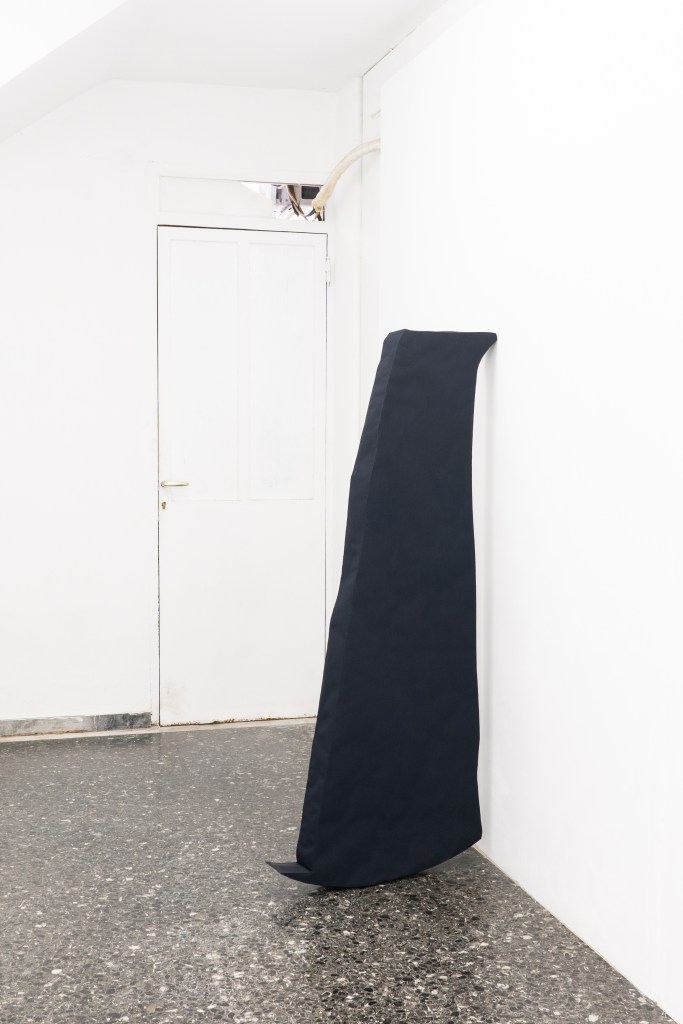
Approaching the second door of the ground floor, the one that leads to the backyard, a paper sculpture resembling the keel of a sailboat is adopting a posture of rest, like a human tired after a long journey. The paper’s properties – its fragility and light weight – highlight the delicate nature of Maxence Chevreau’s work. Instead of a definitive end, he proposes a pause, offering once again a place to rest and wait in.

 Eleni Riga
Laisser un commentaire