Ruth Switalski
Curator Eleni Riga
Opening Wednesday 25th October, 8-11 pm
Open 26th, 27th, 29th October, 5-9 pm
Break my cocoon/ peel my skin
touch my wounds.
Dive into my sea/ swim in my depths
return to the surface with an empty shell.
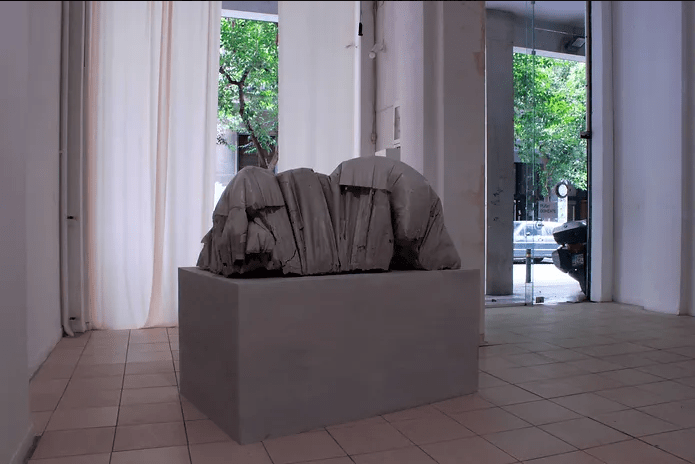
About eggshells and other possible becomings is the first solo show of the British artist Ruth Switalski. This exhibition is devoted to the archetypal human body highlighting the global female body using social feminist and Deleuzian theories. Switalski’s bodies extend in different media: sculpture, installation and video among others. The artist gives a glimpse of her in-situ research on female representation through mythological characters such as goddesses, muses and nymphs and challenges the traditional subject-object dichotomy. The exhibition itself is conceived as an empty shell, a broken cocoon, a peeled skin.
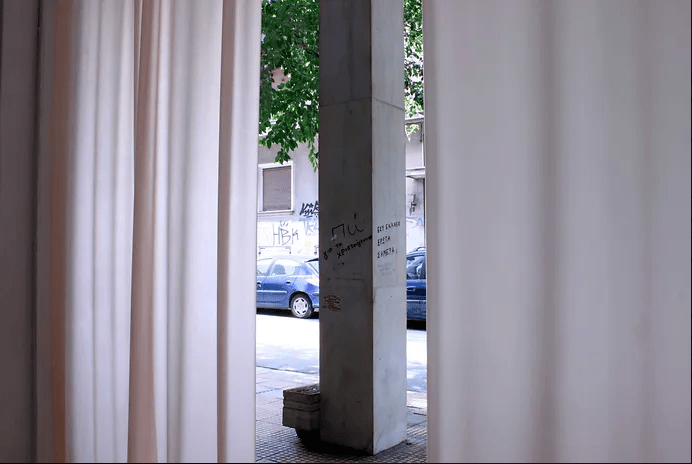
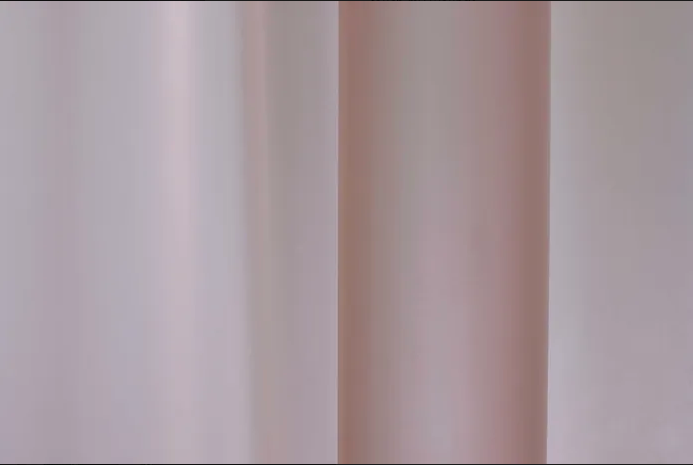
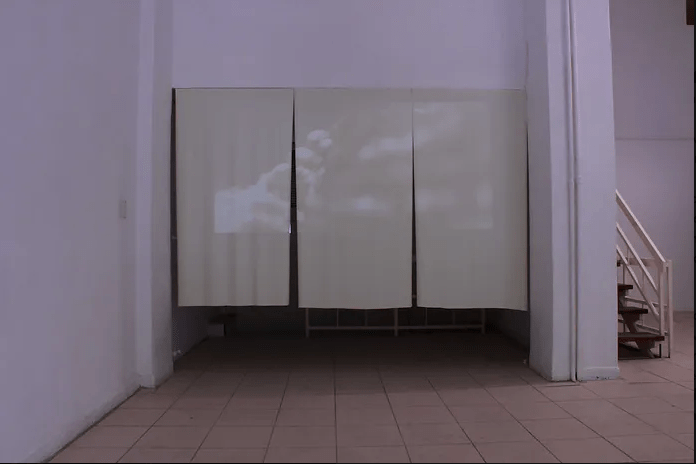
The central piece of the exhibition is a long curtain made from natural skin color latex hanging from the main window of the gallery space. The artist has always been interested in the fundamentals of both art and anthropology. Therefore, the work questions the division between nature and culture and challenges the symbolism of the frequent painting motif, the curtain.
What lies behind the curtain?
In this case, the curtain designates a direction or a space rather than a mood to cover or uncover something secret or hidden. It is a window to a body totalized by the male gaze. The work intimately engages the viewer in a quest of domesticity that evokes Switalski’s research on mythological female characters, goddesses, muses and nymphes, symbolizing virtues and values designated by a male dominated polis. The material chosen for the curtain sets the tone for a world ambiguously natural and crafted, a world of cyborgs and all the possible becomings. If the Western world is based on myths of unity and fullness, this is a broken cocoon.
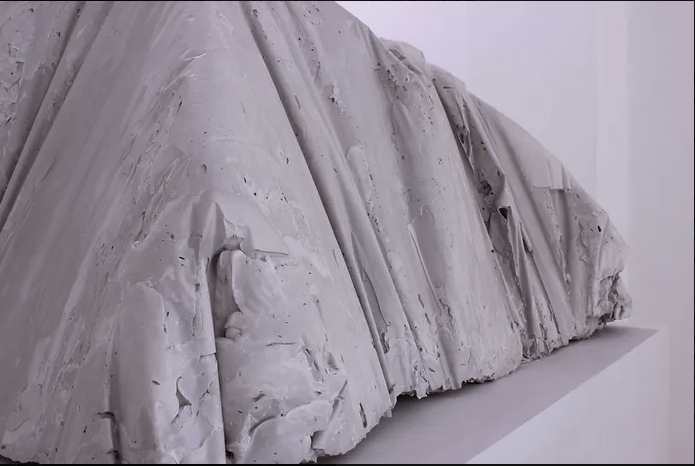
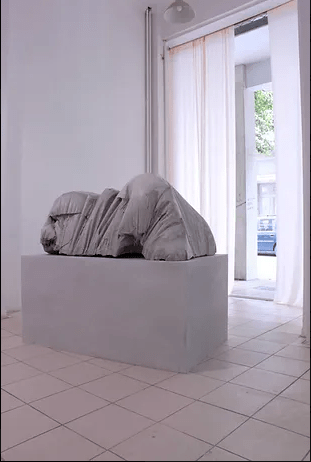
Like Thomas touching the wound of Jesus, an anatomical quest into the archetypal (myth) of the creation, the human body opens up the possibilities for the birth of different subjectivities. The artist attempts a larger scale work, made of plaster, a work that demands attention and care. The sculpture that constitutes the idea of the wholeness lies in the center of the exhibition, referencing the prototype of paintings that have marked the history of art, such as Manet’s Olympia. A body that both grants and restricts. Only this body appears without organs.
Moreover, Switalski presents for the first time an earlier work, a video of live coral that acts as potential metaphor for a new body that escapes from the binary world constructed on the idea of surfaces and depths and breaks free from conventions. We dive into the depths of the sea following her quests, only to return to the surface with an empty shell.
Ruth Switalski (b. 1991 in Leeds, UK) lives and works in Glasgow, Scotland. Switalski graduated from the Master of Letters (MLitt) in Fine Art Practice: Painting from the Glasgow School of Art in 2014. Her work questions the essence of painting with emphasis on materiality. She is interested in feminism, anthropology and anatomy. She has also founded and run the gallery 1 Royal Terrace from 2013-2016. Exhibitions include: -scape, Glasgow International 2016, Glasgow (2016); Suck and See, The Bedroom, Edinburgh, Scotland (2015); Information, Paisley Museum, GENERATION programme, Paisley, Scotland (2014); Draw-In, St Margaret’s House, Edinburgh, Scotland (2014); Skin & Bones, 1 Royal Terrace, Glasgow, Scotland (2014).
 Eleni Riga
Laisser un commentaire